




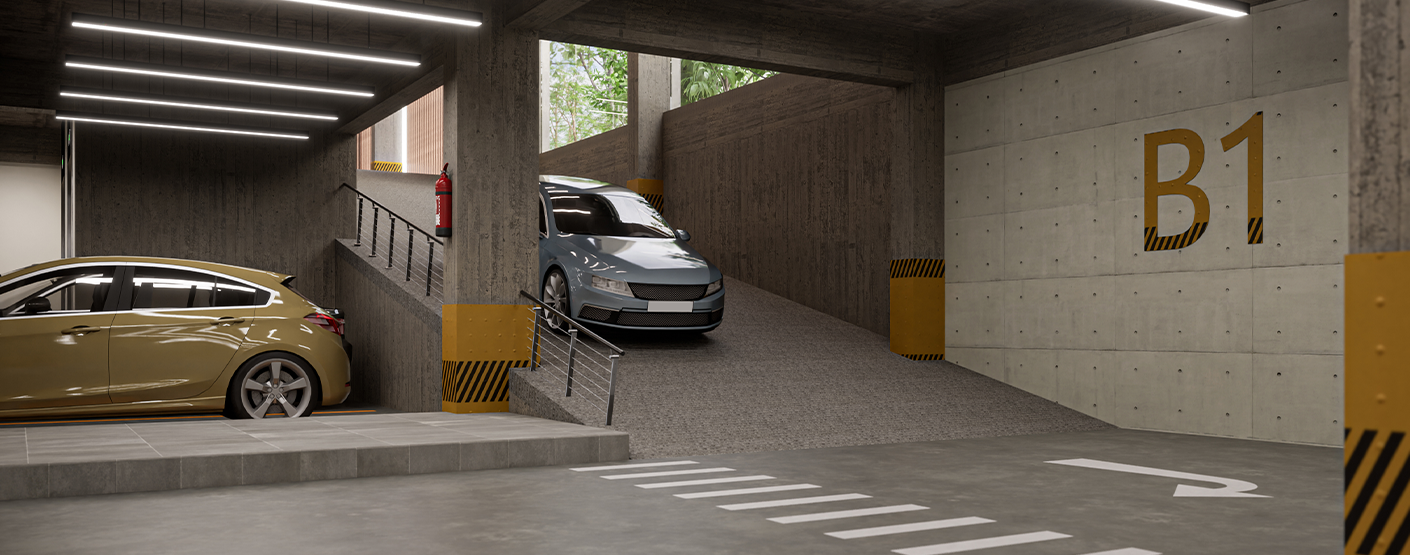
Video analytics for underground parking in residential buildings
Underground parking is a core part of everyday life in multi‑storey residential buildings. It serves residents, guests, couriers, and emergency vehicles, yet it often generates as many questions as solutions: Which spaces are available? Who’s authorized to park here? How can congestion be minimized? How can operators ensure a safe, orderly environment in a space that’s often out of sight and out of mind?
Research shows that a resident’s perception of safety and convenience in parking environments — especially enclosed underground garages — significantly influences overall satisfaction with their residential setting. When people feel secure and confident about parking, their comfort and trust in property management increase, contributing to a better quality of life. Evidence indicates that secure parking environments reduce fear of crime and property loss, enhancing resident satisfaction.
As underground parking complexity grows with resident expectations and vehicle flow, operators need more than cameras and manual checks. They need real‑time visibility and insights that help them manage both everyday use and unexpected situations.
Underground parking presents several operational challenges inherent to its design and use patterns. Unlike open surface lots, underground garages are constrained by architecture — low ceilings, limited lighting, narrow lanes, and multiple access points. These conditions make it difficult to understand what’s happening at any given moment.
Without continuous, actionable visibility, operators often learn about issues only after a resident reports them or after reviewing hours of archived footage. This reactive posture delays responses to congestion, disputes over spots, unauthorized vehicle detection, or incidents like minor collisions and vandalism.
Even routine tasks — such as ensuring that emergency vehicles can reach their destination unimpeded, or confirming that short‑term visitor parking is being used appropriately — become time‑consuming without a clear, unified operational view. Residents may spend excessive time circling for open spots, frustration may grow during peak hours, and security staff may struggle to enforce policies consistently.
Underground parking is not just about space; it’s about flow, safety, accountability, and resident satisfaction.
Smart video analytics turns raw visual data fr om cameras into meaningful insight. Instead of wrestling with endless footage after the fact, operators gain a real‑time, contextualized picture of garage activity.
In practice, this means operators can:
Understand space occupancy at a glance, reducing “parking fatigue” for residents and helping managers guide vehicle movement more efficiently using parking occupancy detection cameras.
Monitor unauthorized vehicles or repeated access attempts, flagging them for follow‑up without manual patrols through vehicle whitelist/blacklist access control.
Use parking guidance system technologies to detect patterns of congestion or misuse during peak periods and make proactive adjustments before frustration escalates.
Respond faster to incidents, such as vehicle damage, disputes, or blocked access for emergency vehicles, because alerts and visual context are delivered instantly using smart parking video analytics.
This deeper visibility supports not just security teams but also property managers and front‑desk staff. Less time is spent digging through archives; more time is spent on strategic planning, service optimization, and resident experience improvements.
TRASSIR applies video analytics to underground parking as part of a broader residential safety and operations ecosystem, helping complexes manage parking dynamically and transparently.
In an underground parking scenario, TRASSIR enables operators to see what is happening now and how patterns evolve over time. Instead of separate feeds and manual checks, a unified operational dashboard offers a live view of occupancy, vehicle flow, and behavior in real time.
For example:
The license plate recognition for parking can identify authorized vehicles and allow hands‑free access as residents or visitors approach entry barriers, reducing queues and departure delays.
Operators receive timely notifications when certain areas become congested. They can then implement traffic control measures, such as rerouting vehicles or opening buffer zones for deliveries and emergency access, using parking space occupancy detection.
The underground garage CCTV system automatically flags unauthorized or suspicious vehicle movements, enabling verification or intervention before resident complaints escalate.
At the same time, operators can generate status reports, track usage trends, and forecast peak times — all without manual spreadsheet compilation or lengthy video reviews. Goals like reducing congestion, improving resident experience, and increasing overall parking safety become measurable and manageable.
This scenario‑oriented approach turns underground parking from a silent operational challenge into a visible, actionable part of the residential ecosystem.
Explore all TRASSIR’s residential and real estate solutions.
In modern residential buildings, underground parking is more than a storage area for vehicles — it is a touchpoint of daily life. When residents feel confident about wh ere and how they park, their perception of safety and quality of management rises. Operators who can see clearly, act decisively, and plan strategically gain not only operational efficiency but also resident trust.
By embedding video analytics into the broader building management framework, organizations can ensure that underground parking is safe, predictable, and resident‑friendly — transforming it from a blind spot into an asset in the everyday residential experience.
What's New?
All news
Ensuring guest safety in hotel lobbies and common areas
Ensuring guest safety in hotel lobbies and common areas
Monitoring playground and sports areas for children’s safety
Monitoring playground and sports areas for children’s safety
TRASSIR & ZNA Teknoloji at Retail Days İstanbul 2026: Powering the next era of smart retail
TRASSIR & ZNA Teknoloji at Retail Days İstanbul 2026: Powering the next era of smart retail
TRASSIR FMPA — secure your facility 24/7
TRASSIR FMPA — secure your facility 24/7
Protecting high-value industrial equipment from theft
Protecting high-value industrial equipment from theft

AI video insights for retail inventory management and loss prevention
AI video insights for retail inventory management and loss prevention
TRASSIR introduces FMPA — Face Match Passage Analysis
TRASSIR introduces FMPA — Face Match Passage Analysis
Improving visitor flow in museums and galleries with smart video analytics
Improving visitor flow in museums and galleries with smart video analytics
Why camera setup matters for license plate recognition — and how to get it right
Why camera setup matters for license plate recognition — and how to get it right

How video analytics help reduce workplace accidents in factories
How video analytics help reduce workplace accidents in factories
Industrial facility in the UAE enhances safety compliance with TRASSIR AI analytics
Industrial facility in the UAE enhances safety compliance with TRASSIR AI analytics
Predictive maintenance in real estate using video data
Predictive maintenance in real estate using video data
TRASSIR introduces Weight View — automated vehicle weight monitoring script
TRASSIR introduces Weight View — automated vehicle weight monitoring script

Preventing theft of high-value medicines in pharmacies
Preventing theft of high-value medicines in pharmacies
Food production facility enhances security with centralized TRASSIR surveillance
Food production facility enhances security with centralized TRASSIR surveillance
Kipaş Kağıt Fabrikası upgrades perimeter security with TRASSIR
Kipaş Kağıt Fabrikası upgrades perimeter security with TRASSIR

Combining POS and video analytics to reduce errors at the counter
Combining POS and video analytics to reduce errors at the counter
Leading textile manufacturer enhances security and operational efficiency with TRASSIR
Leading textile manufacturer enhances security and operational efficiency with TRASSIR

Leveraging video data to improve operational KPIs in real estate
Leveraging video data to improve operational KPIs in real estate
Try TRASSIR For Your Business
Learn more about how TRASSIR analytic modules work! Demo mode is an opportunity to see for yourself how the system works, and also check the interface and test all the functions.Success!
We will contact you as soon as possible