




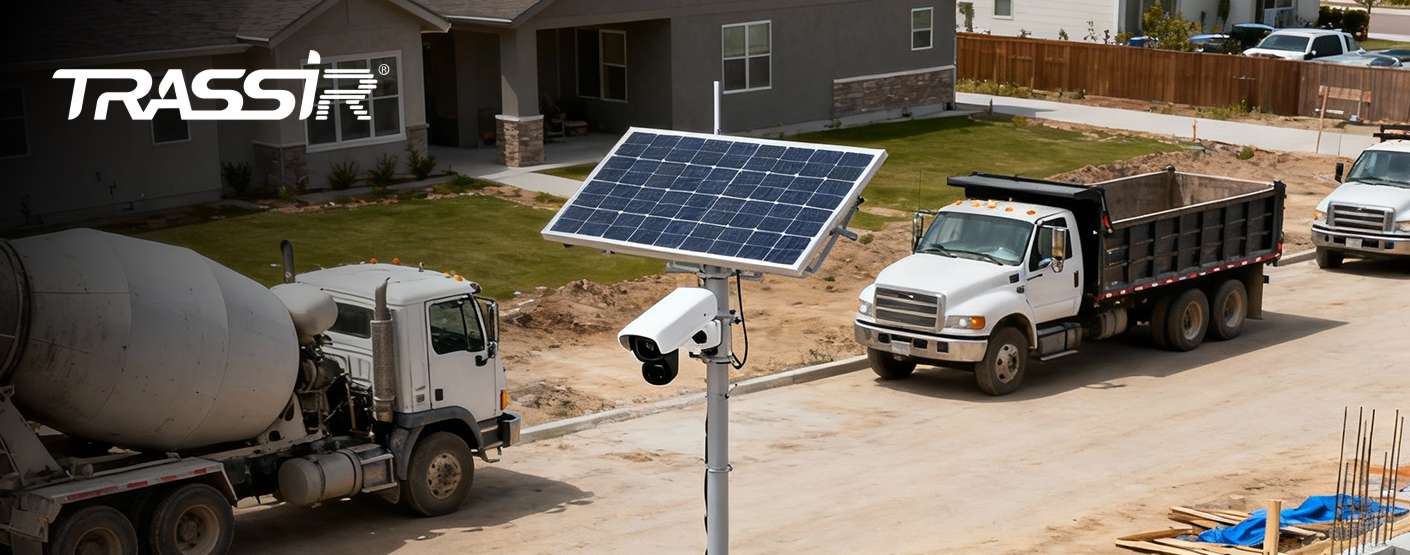
Construction Site Equipment Tracking: Preventing Million-Dollar Losses Through Advanced Logistics Solutions
The construction industry faces an unprecedented equipment security crisis, with annual losses reaching $1 billion in the United States alone. Traditional security measures are failing to protect valuable machinery and tools from sophisticated theft operations, while poor asset visibility leads to inefficient resource allocation and project delays. This comprehensive analysis examines how modern equipment tracking technologies, particularly TRASSIR's integrated security platform, provide construction and logistics companies with the tools necessary to prevent catastrophic losses while optimizing operational efficiency. By implementing real-time monitoring, AI-powered analytics, and comprehensive tracking solutions, businesses can achieve up to 40% reduction in theft, 60% improvement in operational efficiency, and significant cost savings across their equipment lifecycle management.
Construction equipment theft statistics showing the billion-dollar impact on the industry
Construction sites have become prime targets for organized criminal enterprises, resulting in devastating financial consequences across the industry. Recent data reveals that over 11,000 construction equipment thefts occur annually in the United States, with individual incidents averaging $6,000 in direct losses. However, these figures represent only the tip of the iceberg, as indirect costs including project delays, rental equipment expenses, and increased insurance premiums can multiply the actual financial impact by three to five times.
The National Equipment Register (NER) estimates that construction and farm equipment theft results in annual losses between $300 million and $1 billion, with recovery rates remaining dismally low at just 21-22%. This stark reality means that once equipment disappears, companies have less than a one-in-four chance of recovery, making prevention absolutely critical for business survival. The situation becomes even more alarming when considering that organized theft rings increasingly target larger, more valuable assets, with some single-night operations resulting in losses exceeding $100,000.
Theft patterns vary significantly across different regions, with certain states experiencing disproportionately high incident rates. Texas leads with 2,375 reported stolen construction equipment cases in a single year, while metropolitan areas like Los Angeles and Miami have become centers for organized theft operations. These criminal enterprises specifically target construction sites due to several vulnerability factors: valuable equipment left in open areas, minimal 24/7 surveillance, and the ability to quickly resell stolen machinery through established black market networks.
Construction equipment theft particularly impacts rural and suburban development projects, where sites often lack adequate perimeter security and are located far from immediate law enforcement response capabilities. Criminals exploit these geographical advantages, using stolen trailers and trucks to rapidly transport heavy machinery before authorities can respond to alarm systems.
ROI benefits achieved through implementation of equipment tracking systems
The true financial impact of equipment theft extends far beyond the replacement value of stolen items. Project delays caused by missing equipment can trigger cascade effects throughout construction timelines, resulting in penalty clauses, extended labor costs, and client relationship damage. When specialized machinery disappears, contractors often face weeks of delays waiting for replacement equipment or pay premium rates for emergency rentals.
Insurance implications compound these challenges, as repeated theft claims drive up premium costs and may result in coverage limitations or policy cancellations. Some contractors report insurance premium increases of 15-25% following multiple theft incidents, creating long-term financial burdens that persist years beyond the original loss. Additionally, the administrative burden of theft reporting, insurance claims processing, and equipment replacement consumes valuable management time that could otherwise focus on productive business operations.
Global Positioning System (GPS) tracking has emerged as the foundation of modern equipment security, providing real-time location monitoring with accuracy typically ranging from 1-5 meters. Advanced GPS trackers designed for construction equipment offer extended battery life lasting weeks to months, ensuring continuous monitoring even when equipment remains idle for extended periods. These devices integrate cellular communication technologies to transmit location data, movement alerts, and operational status information directly to fleet management platforms accessible via smartphones and web dashboards.
Modern GPS tracking solutions incorporate geofencing capabilities, allowing contractors to establish virtual boundaries around job sites and receive instant notifications when equipment moves outside authorized areas. This proactive alert system enables rapid response to potential theft situations, significantly improving recovery chances when implemented correctly. Case studies demonstrate that companies utilizing GPS tracking recover stolen equipment in hours rather than days, with some reporting 10-fold improvements in asset recovery rates compared to traditional security measures.
Radio Frequency Identification (RFID) technology provides complementary tracking capabilities particularly effective for smaller tools and materials management. RFID tags operate across ranges from direct contact to 100 meters, depending on the specific technology implementation, offering room-level location accuracy suitable for warehouse and storage facility applications. These systems excel in inventory management scenarios, enabling automated check-in/check-out procedures that reduce administrative overhead while providing detailed usage tracking.
Active RFID systems incorporating rechargeable batteries extend operational range and enable more sophisticated data collection, including environmental monitoring and tamper detection. Construction sites implementing comprehensive RFID tagging report up to 90% reduction in equipment misplacement incidents and significant improvements in tool accountability. The technology proves particularly valuable for managing high-value specialized tools that frequently move between different work areas within large construction projects.
Comparison of equipment tracking technologies and their optimal applications
Ultra-wideband (UWB) technology represents the cutting edge of precise indoor location tracking, offering accuracy within 10 centimeters through advanced time-of-flight and angle-of-arrival measurement techniques. UWB systems excel in complex indoor environments where GPS signals prove unreliable, making them ideal for tracking equipment within large warehouses, manufacturing facilities, and multi-story construction projects. The technology's low power consumption and interference resistance enable deployment in challenging industrial environments without disrupting existing wireless infrastructure.
Bluetooth Low Energy (BLE) provides a cost-effective alternative for short-range tracking applications, offering 1-3 meter accuracy within 50-meter operational ranges. BLE beacons attached to tools and equipment enable proximity-based tracking systems that automatically log asset locations as workers move throughout job sites. These systems prove particularly effective for tracking smaller, high-value tools that traditional GPS solutions cannot accommodate due to size or power constraints.
TRASSIR's advanced security platform combines intelligent video surveillance with comprehensive equipment tracking capabilities, creating a unified solution that addresses both theft prevention and operational optimization needs. The system's ActiveStock analytics module integrates tightly with construction site operations, linking video footage with equipment movements, personnel activities, and material handling processes. This integration enables rapid incident investigation, reducing the time required to analyze security events from hours to minutes through automated footage filtering and correlation.
The platform's Face Recognition technology achieves 99.8% accuracy in identifying authorized personnel, providing sophisticated access control that prevents unauthorized individuals from approaching valuable equipment. Combined with TRASSIR's Neuro Detector systems, the platform can identify specific safety violations, unauthorized equipment operation, and suspicious behavior patterns in real-time. These capabilities prove particularly valuable on large construction sites where human monitoring cannot provide comprehensive coverage of all equipment and activity areas.
TRASSIR's AutoTRASSIR system provides automated license plate recognition (LPR) capabilities that monitor all vehicles entering and exiting construction sites, creating detailed logs of delivery schedules, personnel arrivals, and potential security threats. The system automatically identifies banned vehicles or unauthorized personnel attempting site access, triggering immediate alerts to security personnel. This proactive approach prevents many theft attempts before criminals can access valuable equipment or materials.
Integration with vehicle tracking capabilities allows the system to correlate license plate data with GPS tracking information, providing comprehensive visibility into equipment transport activities. When equipment disappears, the system can immediately identify which vehicles were present during the relevant timeframe, significantly accelerating investigation processes and improving recovery prospects.
TRASSIR's comprehensive equipment tracking architecture for construction logistics
TRASSIR's ActiveDome technology controls high-speed pan-tilt-zoom cameras to ensure comprehensive video surveillance coverage across large construction sites. The system automatically tracks movement and suspicious activities, providing operators with detailed visual information about potential security threats. Advanced cameras maintain visual clarity even in challenging lighting conditions, ensuring effective monitoring during both day and night operations.
The integration of multiple camera types, including thermal imaging capabilities, enables the system to detect unauthorized activity regardless of environmental conditions. Thermal cameras prove particularly effective for perimeter monitoring, detecting human presence through heat signatures even when traditional visible-light cameras cannot provide adequate coverage. This comprehensive approach ensures that valuable equipment remains under constant surveillance, significantly deterring theft attempts.
A comprehensive case study involving a major construction firm demonstrates the practical benefits of implementing advanced equipment tracking solutions. The company faced significant challenges with equipment misplacement and theft across multiple job sites, resulting in project delays and increased operational costs. By implementing GPS tracking devices on major equipment including excavators, bulldozers, and cranes, combined with RFID systems for smaller tools, the firm achieved remarkable improvements in asset management.
Results from the implementation included a 30% reduction in equipment misplacement, saving countless hours previously spent searching for missing machinery. Theft incidents decreased by 40% through geofencing alerts that immediately notified management when equipment moved outside authorized areas. Most significantly, equipment utilization improved by 25% through better resource allocation enabled by real-time location visibility. The system's usage reports allowed managers to optimize equipment deployment, ensuring machinery was utilized where most needed.
Construction companies implementing comprehensive tracking solutions typically achieve substantial return on investment within the first year of deployment. Cost savings derive from multiple sources: reduced equipment loss through theft prevention, improved utilization rates that eliminate unnecessary rental expenses, and decreased maintenance costs through better operational monitoring. Companies report annual savings ranging from $50,000 to $120,000 per implemented system, depending on fleet size and operational complexity.
Shoring Engineers, a construction company that implemented GPS tracking, saved between $50,000 and $120,000 annually through improved equipment visibility and utilization optimization. Boudreau Pipeline achieved monthly savings of $15,000 to $19,000 through idle time reduction and better equipment allocation decisions enabled by utilization reporting. These case studies demonstrate that equipment tracking technology investments typically pay for themselves within 6-12 months while providing ongoing operational benefits.
Advanced tracking systems enable predictive maintenance strategies that significantly reduce unexpected equipment failures and associated costs. By monitoring engine hours, operational patterns, and performance metrics, tracking systems can predict when equipment requires maintenance before failures occur. This proactive approach reduces maintenance costs by 20-30% while extending equipment lifespan and reducing project disruption caused by unexpected breakdowns.
Construction companies utilizing predictive maintenance report substantial improvements in equipment availability and reliability. Scheduled maintenance during non-critical periods minimizes impact on project timelines while reducing emergency repair costs that can be three to five times higher than planned maintenance expenses. The data collected through tracking systems also provides valuable insights for equipment replacement planning and lifecycle cost analysis.
Equipment tracking technologies extend beyond construction sites to warehouse and logistics operations, where similar challenges exist regarding asset visibility and security. TRASSIR's logistics-focused solutions address shrinkage, operational control, and supply chain visibility through integrated video analytics and tracking systems. ActiveStock integration with warehouse management systems provides real-time product movement tracking, barcode scan correlation, and automated inventory management.
Modern warehouse tracking systems achieve over 99% accuracy in inventory monitoring through advanced barcode and RFID scanning technologies. Real-time inventory visibility enables businesses to optimize stock levels, reduce carrying costs, and improve customer service through accurate order fulfillment capabilities. Integration with predictive analytics helps warehouse operators anticipate demand patterns and optimize storage allocation.
Supply chain security has become increasingly critical as global logistics networks face growing cyber and physical security threats. Comprehensive tracking solutions provide end-to-end visibility from raw material procurement through final product delivery, enabling rapid response to disruptions and security incidents. Real-time monitoring capabilities help identify potential supply chain vulnerabilities before they impact operations.
Advanced supply chain tracking systems incorporate blockchain technology to provide immutable records of product movement and custody transfers. These systems enhance transparency, reduce fraud risk, and improve compliance with regulatory requirements across international supply chains. Companies implementing comprehensive supply chain security measures report significant improvements in operational resilience and risk management capabilities.
Successful equipment tracking implementation requires a comprehensive security strategy that addresses physical, technological, and procedural elements. Organizations must develop formal security policies that define access control measures, establish reporting protocols for suspicious activities, and assign clear security responsibilities to site supervisors. This structured approach ensures consistent implementation across multiple sites and creates accountability for security outcomes.
Physical security measures should complement technological solutions, including perimeter fencing, controlled access points, and strategic lighting to deter criminal activity. Combining traditional security approaches with advanced tracking technology creates layered defense systems that significantly improve overall security effectiveness. Regular security audits help identify vulnerabilities and ensure that implemented measures remain effective as operational conditions change.
Equipment tracking solutions must integrate seamlessly with existing business systems to maximize operational efficiency and return on investment. Successful implementations connect tracking platforms with enterprise resource planning (ERP) systems, fleet management software, and maintenance scheduling applications. This integration enables automated workflows that reduce administrative burden while improving data accuracy and decision-making capabilities.
Scalability considerations ensure that tracking solutions can grow with business needs without requiring complete system replacement. Modular system architectures allow organizations to start with basic tracking capabilities and expand to include additional features such as predictive maintenance, utilization optimization, and advanced analytics. Cloud-based platforms provide the flexibility needed to support multi-site operations and accommodate future growth requirements.
Successful equipment tracking implementation requires comprehensive training programs that ensure all personnel understand system capabilities and operational procedures. Training should cover proper equipment operation, security protocols, and emergency response procedures to maximize system effectiveness. Regular refresher training helps maintain security awareness and ensures that new employees receive adequate system orientation.
Change management strategies should address potential resistance to new tracking technologies while highlighting benefits for both individual workers and overall business operations. Clear communication about privacy policies, data usage, and system objectives helps build employee acceptance and cooperation. Organizations that invest in comprehensive training and change management typically achieve better implementation results and higher system adoption rates.
The future of equipment tracking lies in artificial intelligence and machine learning technologies that provide predictive insights and automated decision-making capabilities. AI-powered systems can analyze historical usage patterns, environmental conditions, and operational data to predict optimal equipment deployment strategies and maintenance requirements. Machine learning algorithms continuously improve prediction accuracy as they process more data, providing increasingly valuable insights for operational optimization.
Computer vision technology combined with artificial intelligence enables automated equipment identification, condition assessment, and activity monitoring without human intervention. These systems can detect unauthorized equipment use, safety violations, and potential security threats in real-time, triggering appropriate response protocols. Advanced AI analytics help organizations identify operational inefficiencies and optimization opportunities that would be difficult to discover through traditional analysis methods.
Fifth-generation (5G) wireless technology promises to revolutionize equipment tracking through dramatically improved data transmission speeds and reduced latency. Enhanced connectivity enables real-time video streaming from remote locations, comprehensive sensor data collection, and immediate response to security events. 5G networks support significantly more connected devices per square kilometer, enabling comprehensive IoT deployments across large construction sites and logistics facilities.
The improved connectivity also enables edge computing applications that process data locally rather than relying on distant cloud services. This approach reduces latency while improving system reliability in areas with limited network coverage. Edge computing capabilities enable real-time decision-making for security and operational optimization without depending on constant internet connectivity.
Future equipment tracking systems will integrate with autonomous vehicles and robotic systems to provide comprehensive asset management across construction and logistics operations. Autonomous drones can provide aerial surveillance and equipment monitoring capabilities that complement ground-based tracking systems. These systems can patrol large areas automatically, detecting security threats and monitoring equipment status without human intervention.
Integration with autonomous construction equipment enables self-reporting systems where machinery automatically transmits location, operational status, and maintenance requirements to central management platforms. This level of automation reduces administrative overhead while providing unprecedented visibility into equipment performance and utilization patterns. The combination of autonomous systems and advanced tracking creates opportunities for fully automated asset management that optimizes operations while minimizing human intervention requirements.
The construction and logistics industries stand at a critical juncture where traditional security approaches can no longer address the sophisticated threats and operational challenges facing modern businesses. The billion-dollar equipment theft crisis, combined with increasing pressure for operational efficiency and cost control, demands comprehensive technology-driven solutions that provide both security and optimization benefits. TRASSIR's integrated security architecture represents the evolution of equipment tracking from simple location monitoring to comprehensive operational intelligence platforms that enhance every aspect of asset management.
The evidence overwhelmingly demonstrates that organizations implementing advanced equipment tracking solutions achieve substantial return on investment through theft reduction, improved utilization, and operational optimization. Companies report 40% reductions in theft incidents, 60% improvements in operational efficiency, and maintenance cost savings of 20-30% within the first year of implementation. These benefits compound over time as organizations refine their processes and leverage advanced analytics capabilities to identify additional optimization opportunities.
Future developments in artificial intelligence, 5G connectivity, and autonomous systems promise even greater benefits for organizations that invest in scalable, integrated tracking solutions. The key to success lies in adopting comprehensive approaches that combine advanced technology with proper training, strategic planning, and continuous improvement processes. Organizations that embrace these solutions today will establish competitive advantages that become increasingly difficult for competitors to match as technology continues evolving.
As the construction and logistics sectors continue digitizing their operations, equipment tracking technologies will become essential infrastructure rather than optional security measures. The organizations that recognize this transition and implement comprehensive tracking solutions will lead their industries while those that delay adoption will face escalating costs and competitive disadvantages. The choice is clear: embrace advanced equipment tracking technology now, or accept the mounting costs of continued asset losses and operational inefficiencies.
Articles
All articles
The Complete Guide to Retail Crowd Density Monitoring Using Video Analytics
The Complete Guide to Retail Crowd Density Monitoring Using Video Analytics

The Ultimate Guide to Occupancy Tracking Technology: Systems, Sensors, and Strategy
The Ultimate Guide to Occupancy Tracking Technology: Systems, Sensors, and Strategy

Maximizing Retail Performance: The Ultimate Guide to Heat Mapping Technology
Maximizing Retail Performance: The Ultimate Guide to Heat Mapping Technology

The Complete Guide to Deploying AI Video Analytics in Retail and Enterprise
The Complete Guide to Deploying AI Video Analytics in Retail and Enterprise

How to Design a Scalable Video Surveillance System for Multi-Site Retail
How to Design a Scalable Video Surveillance System for Multi-Site Retail

Upgrading Legacy CCTV: How to Integrate AI Without a Rip-and-Replace
Upgrading Legacy CCTV: How to Integrate AI Without a Rip-and-Replace

Upgrading Legacy CCTV: The Complete Guide to AI Security Camera Integration
Upgrading Legacy CCTV: The Complete Guide to AI Security Camera Integration
The Evolution of Video Analytics: How AI Transforms Security and Operations
The Evolution of Video Analytics: How AI Transforms Security and Operations

How AI Video Surveillance Solves Security Staffing Shortages and Reduces Costs
How AI Video Surveillance Solves Security Staffing Shortages and Reduces Costs

Maximizing Security System ROI: The Financial Case for Smart Surveillance
Maximizing Security System ROI: The Financial Case for Smart Surveillance

How to Calculate the ROI of a Business Security System
How to Calculate the ROI of a Business Security System
Master Multi-Brand CCTV Management: The Ultimate Guide to Brand-Agnostic Surveillance
Master Multi-Brand CCTV Management: The Ultimate Guide to Brand-Agnostic Surveillance

Strategic Guide to Retail Video Surveillance Migration: Upgrading Legacy Systems
Strategic Guide to Retail Video Surveillance Migration: Upgrading Legacy Systems

How to Reduce Commercial Security Costs Without Compromising Protection
How to Reduce Commercial Security Costs Without Compromising Protection

How to Reduce Retail Operational Costs With Video Analytics
How to Reduce Retail Operational Costs With Video Analytics

Security Staffing Optimization: The Complete 2026 Guide
Security Staffing Optimization: The Complete 2026 Guide

AI Retail Theft Prevention: How Smart Cameras Stop Shrinkage
AI Retail Theft Prevention: How Smart Cameras Stop Shrinkage

Modern Shopping Center Security Systems: The Complete Guide
Modern Shopping Center Security Systems: The Complete Guide
Video Management Systems Explained: Features, Benefits, and How to Choose the Right VMS
Video Management Systems Explained: Features, Benefits, and How to Choose the Right VMS

The Reality of the Single Pane of Glass: Achieving Unified IT Visibility
The Reality of the Single Pane of Glass: Achieving Unified IT Visibility
Try TRASSIR For Your Business
Learn more about how TRASSIR analytic modules work! Demo mode is an opportunity to see for yourself how the system works, and also check the interface and test all the functions.Success!
We will contact you as soon as possible