




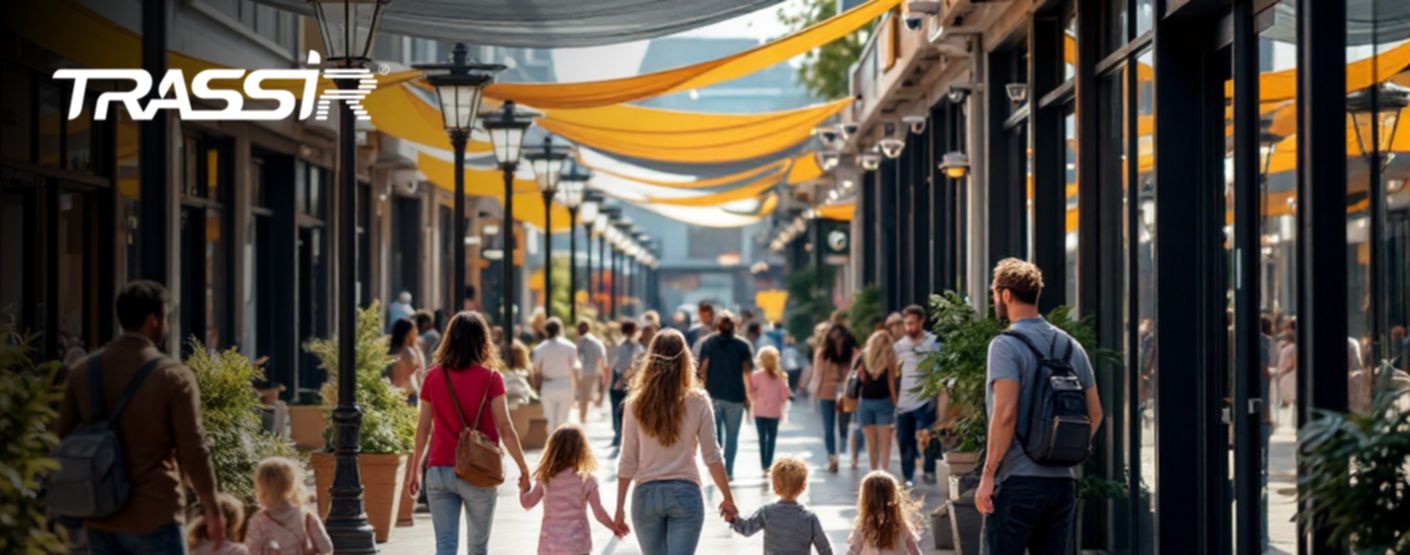
The Complete Guide to Retail Crowd Density Monitoring Using Video Analytics
The Business Case for Intelligent Crowd Management
The complexities of managing retail crowds have grown significantly over the last few years. Customers expect frictionless shopping experiences, while evolving safety regulations place stricter requirements on capacity management. Failing to address store density effectively carries measurable business risks. Industry data indicates that overcrowding incidents are rising by 10-15% annually, and long, unmanaged checkout lines can lead to queue abandonment affecting 20-30% of potential sales.
Implementing automated density monitoring directly addresses these challenges by transforming reactive staff responses into proactive, data-driven operations. A comprehensive approach impacts the bottom line in multiple ways: it protects revenue by reducing walkouts, enhances the brand's reputation by maintaining a comfortable shopping environment, and minimizes the liability associated with safety hazards. Most retail organizations that strategically implement these systems report a positive return on investment (ROI) within 12 to 18 months.
Core Capabilities of Video Analytics for Retail
Modern video analytics systems merge standard video feeds with artificial intelligence to continuously analyze physical spaces. This technology moves beyond basic recording, turning cameras into sophisticated sensors capable of granular analysis.
Zone-Based Density and Heat Mapping
Rather than treating a store as a single space, video analytics allows operators to divide the floor plan into distinct zones, each with its own customized capacity threshold. The system calculates people per square meter in real time, generating color-coded heat maps on a live dashboard. This granular visibility helps identify precisely where congestion is building, such as near a popular promotional display or a narrow aisle.
Precision Entry Counting
To maintain accurate building-level occupancy, analytics systems monitor people entering and exiting the premises. This continuous counting ensures that the total store capacity remains within safe and legal limits, which is particularly vital during holiday rushes or exclusive product drops.
Intelligent Queue Management
Checkout friction is a primary driver of customer dissatisfaction. Analytics technology automatically measures queue lengths and calculates estimated wait times based on the speed of the line. By establishing threshold alerts, store managers are immediately notified when a line becomes too long, allowing them to open additional registers before customers become frustrated.
Crowd Flow and Bottleneck Analysis
Understanding how people navigate a space is essential for long-term optimization. Video analytics tracks the movement patterns and dwell times of shoppers as they transition between zones. This flow analysis identifies persistent choke points, helping operators redesign store layouts, optimize the placement of promotional fixtures, and improve overall space utilization.
Translating Data into Operational Efficiency
Data collection is only valuable if it drives operational improvements. Crowd density monitoring empowers retailers to allocate their resources dynamically and efficiently.
Instead of relying on static, predictive scheduling, store managers can use historical density trends and real-time alerts to align staff deployment with actual traffic patterns. When an automated alert flags a sudden surge in a specific department, employees can be seamlessly redirected from low-traffic zones to high-traffic areas.
This dynamic resource allocation yields tangible results. Organizations typically observe a 30-50% reduction in average queue wait times and a 20-30% improvement in overall staff utilization. By matching labor to real-time demand, retailers reduce unnecessary overtime costs while ensuring that customer service remains high exactly when and where it is needed most.
Enhancing Safety, Compliance, and Emergency Response
Beyond customer experience, the fundamental priority of crowd management is safety. Dense crowds create inherent risks, from minor accidents to severe emergency evacuation complications.
Video analytics systems establish automated response workflows that trigger multi-channel notifications (such as SMS, email, or app alerts) the moment a zone approaches its safety threshold. This allows staff to intervene and disperse congestion well before it escalates into a hazardous situation, resulting in a 50-70% faster response time to overcrowding.
Furthermore, these systems provide critical support during emergencies. Real-time occupancy counts by zone give first responders accurate data on where people are located. Combined with flow analysis to monitor exit route congestion, density monitoring technology can improve emergency evacuation efficiency by up to 40-50%. On a day-to-day basis, the automated tracking and data storage capabilities ensure retailers maintain robust, auditable documentation for fire code and occupancy compliance.
Scaling Up: Strategies for Multi-Location Chains
While single-store implementations are straightforward, multi-location retail chains face the challenge of fragmented procedures and inconsistent density profiles. To succeed at scale, corporate leaders must prioritize standardization and centralized oversight.
By defining consistent density zones, capacity thresholds, and alert classifications across all stores, chains ensure that performance can be accurately compared and managed from a central command. A centralized oversight model allows a single corporate team to monitor compliance across hundreds of locations, share best practices dynamically, and reduce overall monitoring costs by 40-60%.
Achieving this requires continuous, standardized training. Implementing automated response workflows—where specific density alerts trigger predefined, role-based assignments—ensures that an employee in one region responds to an overcrowding incident with the exact same efficiency and protocol as an employee in another.
A Strategic Implementation Roadmap
Successfully deploying crowd density analytics requires a structured, phased approach to ensure high adoption and minimal operational disruption.
Phase 1: Assessment (Weeks 1-2): Document existing crowd management workflows, identify peak traffic periods, and evaluate current camera infrastructure. Establish baseline metrics to measure future success.
Phase 2: Technology Implementation (Weeks 3-8): Deploy the analytics software at priority, high-traffic locations first. Configure capacity thresholds, integrate the software with existing mobile alert systems, and test detection accuracy under various lighting and crowd conditions.
Phase 3: Process Optimization (Weeks 9-12): Develop automated escalation protocols and train staff on how to respond to density alerts. Clear communication channels and role assignments must be established.
Phase 4: Ongoing Measurement: Continuously track peak density levels, alert response times, and queue wait times. Conduct regular monthly reviews to refine thresholds and adjust store layouts based on accumulated flow data.
Crowd density monitoring through video analytics is no longer just a security measure; it is a comprehensive operational tool. By shifting from manual observation to intelligent, automated monitoring, retail leaders can fundamentally improve how their spaces function. Strategic implementation provides the real-time visibility needed to prevent safety hazards, streamline staff allocation, and ensure that every customer enjoys a safe, efficient, and comfortable shopping experience.
Key Takeaways:
Overcrowding and unmanaged queues carry steep costs, contributing to a 20-30% rate of checkout abandonment.
AI-powered video analytics provide real-time zone mapping, entry counting, and queue tracking without requiring manual oversight.
Dynamic staff allocation based on density data can reduce customer wait times by up to 50% and improve labor utilization.
Automated alerts allow store teams to respond to potential overcrowding hazards 50-70% faster than traditional methods.
Multi-location chains achieve the best results by standardizing thresholds and centralizing oversight across all branches.
FAQ:
Q: Do we need to install completely new cameras to use crowd density analytics?
A: In many cases, no. Modern video analytics software can often integrate with a retailer's existing IP camera infrastructure, layering AI capabilities over current video feeds.
Q: How does this technology help with regulatory compliance?
A: The systems continuously monitor and log occupancy levels, automatically alerting management if fire code or safety thresholds are approached. This data is securely stored and can be easily exported for regulatory audits.
Q: Can video analytics accurately measure crowds in highly congested areas?
A: Yes, advanced AI algorithms are specifically trained to calculate density per square meter and track individual movement patterns, maintaining high accuracy even during peak seasonal rushes.
Q: What is the typical timeline for seeing a return on this investment?
A: Retailers implementing comprehensive density monitoring and optimizing their staffing and layout based on the data typically report a positive ROI within 12 to 18 months.
Articles
All articles
The Complete Guide to Retail Crowd Density Monitoring Using Video Analytics
The Complete Guide to Retail Crowd Density Monitoring Using Video Analytics
The Ultimate Guide to Occupancy Tracking Technology: Systems, Sensors, and Strategy
The Ultimate Guide to Occupancy Tracking Technology: Systems, Sensors, and Strategy
Maximizing Retail Performance: The Ultimate Guide to Heat Mapping Technology
Maximizing Retail Performance: The Ultimate Guide to Heat Mapping Technology
The Complete Guide to Deploying AI Video Analytics in Retail and Enterprise
The Complete Guide to Deploying AI Video Analytics in Retail and Enterprise
How to Design a Scalable Video Surveillance System for Multi-Site Retail
How to Design a Scalable Video Surveillance System for Multi-Site Retail

Upgrading Legacy CCTV: How to Integrate AI Without a Rip-and-Replace
Upgrading Legacy CCTV: How to Integrate AI Without a Rip-and-Replace
Upgrading Legacy CCTV: The Complete Guide to AI Security Camera Integration
Upgrading Legacy CCTV: The Complete Guide to AI Security Camera Integration
The Evolution of Video Analytics: How AI Transforms Security and Operations
The Evolution of Video Analytics: How AI Transforms Security and Operations

How AI Video Surveillance Solves Security Staffing Shortages and Reduces Costs
How AI Video Surveillance Solves Security Staffing Shortages and Reduces Costs

Maximizing Security System ROI: The Financial Case for Smart Surveillance
Maximizing Security System ROI: The Financial Case for Smart Surveillance

How to Calculate the ROI of a Business Security System
How to Calculate the ROI of a Business Security System
Master Multi-Brand CCTV Management: The Ultimate Guide to Brand-Agnostic Surveillance
Master Multi-Brand CCTV Management: The Ultimate Guide to Brand-Agnostic Surveillance

Strategic Guide to Retail Video Surveillance Migration: Upgrading Legacy Systems
Strategic Guide to Retail Video Surveillance Migration: Upgrading Legacy Systems

How to Reduce Commercial Security Costs Without Compromising Protection
How to Reduce Commercial Security Costs Without Compromising Protection
How to Reduce Retail Operational Costs With Video Analytics
How to Reduce Retail Operational Costs With Video Analytics
Security Staffing Optimization: The Complete 2026 Guide
Security Staffing Optimization: The Complete 2026 Guide
AI Retail Theft Prevention: How Smart Cameras Stop Shrinkage
AI Retail Theft Prevention: How Smart Cameras Stop Shrinkage

Modern Shopping Center Security Systems: The Complete Guide
Modern Shopping Center Security Systems: The Complete Guide
Video Management Systems Explained: Features, Benefits, and How to Choose the Right VMS
Video Management Systems Explained: Features, Benefits, and How to Choose the Right VMS

The Reality of the Single Pane of Glass: Achieving Unified IT Visibility
The Reality of the Single Pane of Glass: Achieving Unified IT Visibility
Try TRASSIR For Your Business
Learn more about how TRASSIR analytic modules work! Demo mode is an opportunity to see for yourself how the system works, and also check the interface and test all the functions.Success!
We will contact you as soon as possible