




How AI Video Surveillance Solves Security Staffing Shortages and Reduces Costs
The Breaking Point of Traditional Physical Security
For decades, organizations have relied on a combination of on-site security guards and closed-circuit television (CCTV) to protect their assets. However, this traditional approach faces severe limitations in the modern operational landscape. Recruiting and retaining qualified security personnel has become incredibly difficult, with wages for security professionals rising steadily each year. Furthermore, organizations face continuous expenses related to high turnover, overtime coverage, and ongoing training.
Human limitations also compromise the effectiveness of traditional video monitoring. Research indicates that human attention degrades rapidly when watching surveillance feeds; operators can miss up to 45% of screen activity after just 12 minutes, and up to 95% after 22 minutes. Security professionals are often forced to work under intense stress and fatigue, which reduces their situational awareness and increases the likelihood of missing critical events. Ultimately, relying entirely on human observation to monitor dozens or hundreds of cameras is a mathematically and biologically flawed strategy.
How AI Video Analytics Multiplies Workforce Capabilities
Artificial intelligence fundamentally changes how video surveillance operates by turning passive cameras into active, intelligent sensors. Instead of requiring a human to watch a monitor waiting for something to happen, AI-driven software continuously analyzes multiple video feeds 24/7 without fatigue.
These systems are trained to recognize specific patterns, anomalies, and objects. When the software detects a genuine threat—such as an unauthorized intrusion, a visible weapon, or an individual entering a restricted zone—it instantly alerts security personnel. Advanced algorithms are highly effective at distinguishing between harmless activities (like an animal crossing a parking lot or a moving umbrella) and actual security breaches, which drastically reduces the burden of false alarms.
AI also supports proactive security measures like access control. Utilizing facial recognition and auto-enrollment technologies, automated systems can seamlessly authenticate approved personnel and deny access to unrecognized individuals or those on a watchlist. For large campuses, AI can even be integrated with drone technology to perform routine patrol rounds in remote or hard-to-access areas, effectively replacing thousands of hours of tedious manual patrols.
Driving Down Operational and Labor Costs
The most immediate and measurable benefit of AI video surveillance is the dramatic reduction in labor costs. By automating the detection process, organizations can heavily reduce their reliance on full-time manual monitoring.
One of the largest cost-saving opportunities lies in overnight security coverage. Rather than employing costly on-site guards for night shifts and weekends, organizations can transition to remote monitoring. A single off-site operator can simultaneously monitor 10 to 20 locations using a centralized cloud dashboard. If an AI alert triggers, the remote operator verifies the video feed and initiates the appropriate response, such as dispatching local authorities. This consolidation can reduce overnight security labor costs by over 50%, while multi-location monitoring consolidation can yield 40% to 60% savings across an entire retail or corporate chain.
Furthermore, cloud-based AI surveillance eliminates the need for expensive, localized servers and recorders at every individual site. This transition to a unified cloud platform removes heavy upfront hardware investments and slashes ongoing IT maintenance costs, creating a highly scalable and predictable security budget.
Transforming Incident Investigation and Response
When a security incident does occur, the speed of the response dictates the severity of the outcome. Because AI systems analyze and alert in real-time—often within seconds of detecting a threat—security personnel can intervene before a situation escalates into a major loss or tragedy.
Following an event, traditional investigations require security staff to painstakingly review hours of recorded video to find a specific incident. AI eliminates this fatiguing process through smart search capabilities. Security teams can simply search for specific parameters, such as a person wearing a certain color or a specific type of vehicle, and the system will instantly extract the relevant clips. This capability compresses investigation timelines dramatically, reducing the labor hours required for video review by 70% to 80%.
Beyond Security: Business Intelligence and Workplace Safety
The return on investment for AI video analytics extends well beyond crime prevention. The same technology used to detect intruders can be leveraged to ensure workplace safety and operational efficiency.
In industrial settings, AI cameras can monitor compliance with safety protocols, automatically detecting if workers are missing hard hats or high-visibility vests. It can instantly identify environmental hazards such as smoke, fire, or slip-and-fall accidents, ensuring rapid medical response. Thermal screening capabilities can even identify overheating machinery before it causes a fire or mechanical failure.
In the retail sector, AI video analytics serves as a powerful business intelligence tool. By tracking movement patterns and foot traffic, the software generates heatmaps that reveal how customers interact with store layouts and product displays. This data allows management to optimize product placement, improve customer service, and streamline store operations, turning a security expense into a revenue-enhancing asset.
Navigating modern physical security requires a strategic shift away from the expensive, labor-intensive models of the past. As operational budgets tighten and the labor market remains challenging, AI-powered video surveillance offers a sustainable path forward. By automating threat detection, centralizing multi-site monitoring, and drastically reducing the time spent on manual investigations, organizations can achieve a higher standard of safety. Ultimately, embracing AI in physical security allows businesses to optimize their human resources, shifting personnel from monotonous monitoring tasks to decisive, proactive response roles.
Key Takeaways:
Human attention spans limit the effectiveness of traditional video monitoring, making continuous manual observation highly inefficient.
AI video analytics automates threat detection 24/7, filtering out false alarms and alerting staff only when genuine risks occur.
Centralized remote monitoring enabled by AI allows a single operator to oversee multiple locations, cutting overnight staffing costs by up to 70%.
Smart search capabilities reduce post-incident investigation times by up to 80%, replacing hours of manual review with instant, intelligent results.
Beyond security, AI surveillance provides actionable insights for workplace safety compliance and retail business intelligence.
FAQ:
Q: How long does it typically take to see a return on investment (ROI) from AI video surveillance?
A: Most organizations that implement AI analytics for labor cost reduction and operational efficiency typically achieve a positive ROI within 12 to 18 months, driven by savings in staffing, reduced turnover, and faster investigations.
Q: Will AI completely replace human security guards?
A: No. AI is designed to augment human security teams, not replace them entirely. It handles the monotonous task of continuous monitoring so that human guards can focus on physical intervention, strategic planning, and immediate incident response.
Q: Does AI video analytics cause a high number of false alarms?
A: Modern AI systems are specifically trained to reduce false alarms. Advanced algorithms can distinguish between genuine threats and benign movements (like weather, animals, or shadows), ensuring security staff only respond to real issues.
Q: Do businesses need to replace all their existing cameras to use AI surveillance?
A: In most cases, no. Many AI software solutions and cloud platforms are designed to integrate seamlessly with existing digital camera infrastructure, allowing businesses to upgrade their capabilities without massive hardware replacement costs.
Articles
All articles
The Complete Guide to Retail Crowd Density Monitoring Using Video Analytics
The Complete Guide to Retail Crowd Density Monitoring Using Video Analytics

The Ultimate Guide to Occupancy Tracking Technology: Systems, Sensors, and Strategy
The Ultimate Guide to Occupancy Tracking Technology: Systems, Sensors, and Strategy
Maximizing Retail Performance: The Ultimate Guide to Heat Mapping Technology
Maximizing Retail Performance: The Ultimate Guide to Heat Mapping Technology
The Complete Guide to Deploying AI Video Analytics in Retail and Enterprise
The Complete Guide to Deploying AI Video Analytics in Retail and Enterprise

How to Design a Scalable Video Surveillance System for Multi-Site Retail
How to Design a Scalable Video Surveillance System for Multi-Site Retail

Upgrading Legacy CCTV: How to Integrate AI Without a Rip-and-Replace
Upgrading Legacy CCTV: How to Integrate AI Without a Rip-and-Replace

Upgrading Legacy CCTV: The Complete Guide to AI Security Camera Integration
Upgrading Legacy CCTV: The Complete Guide to AI Security Camera Integration
The Evolution of Video Analytics: How AI Transforms Security and Operations
The Evolution of Video Analytics: How AI Transforms Security and Operations

How AI Video Surveillance Solves Security Staffing Shortages and Reduces Costs
How AI Video Surveillance Solves Security Staffing Shortages and Reduces Costs

Maximizing Security System ROI: The Financial Case for Smart Surveillance
Maximizing Security System ROI: The Financial Case for Smart Surveillance

How to Calculate the ROI of a Business Security System
How to Calculate the ROI of a Business Security System
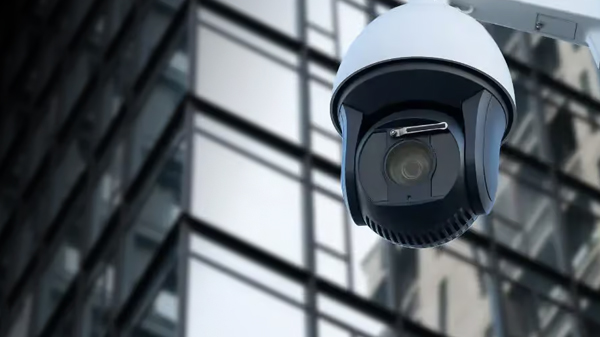
Master Multi-Brand CCTV Management: The Ultimate Guide to Brand-Agnostic Surveillance
Master Multi-Brand CCTV Management: The Ultimate Guide to Brand-Agnostic Surveillance

Strategic Guide to Retail Video Surveillance Migration: Upgrading Legacy Systems
Strategic Guide to Retail Video Surveillance Migration: Upgrading Legacy Systems

How to Reduce Commercial Security Costs Without Compromising Protection
How to Reduce Commercial Security Costs Without Compromising Protection

How to Reduce Retail Operational Costs With Video Analytics
How to Reduce Retail Operational Costs With Video Analytics
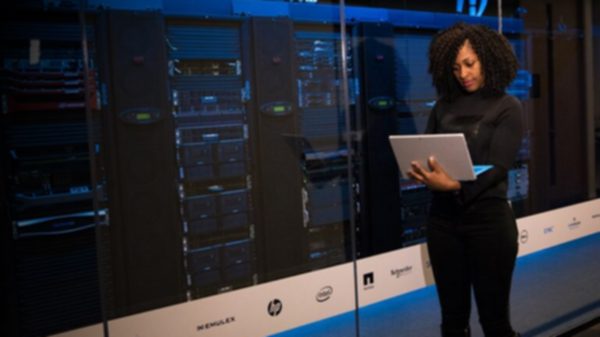
Security Staffing Optimization: The Complete 2026 Guide
Security Staffing Optimization: The Complete 2026 Guide

AI Retail Theft Prevention: How Smart Cameras Stop Shrinkage
AI Retail Theft Prevention: How Smart Cameras Stop Shrinkage

Modern Shopping Center Security Systems: The Complete Guide
Modern Shopping Center Security Systems: The Complete Guide
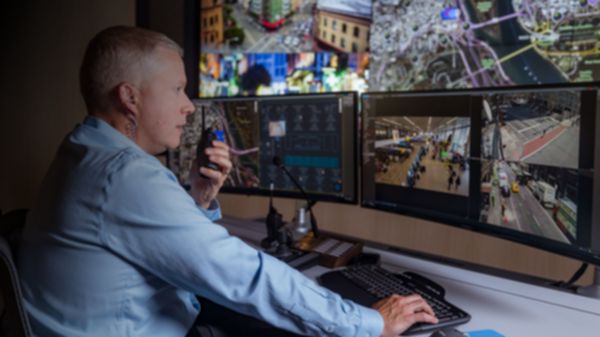
Video Management Systems Explained: Features, Benefits, and How to Choose the Right VMS
Video Management Systems Explained: Features, Benefits, and How to Choose the Right VMS

The Reality of the Single Pane of Glass: Achieving Unified IT Visibility
The Reality of the Single Pane of Glass: Achieving Unified IT Visibility
Try TRASSIR For Your Business
Learn more about how TRASSIR analytic modules work! Demo mode is an opportunity to see for yourself how the system works, and also check the interface and test all the functions.Success!
We will contact you as soon as possible