




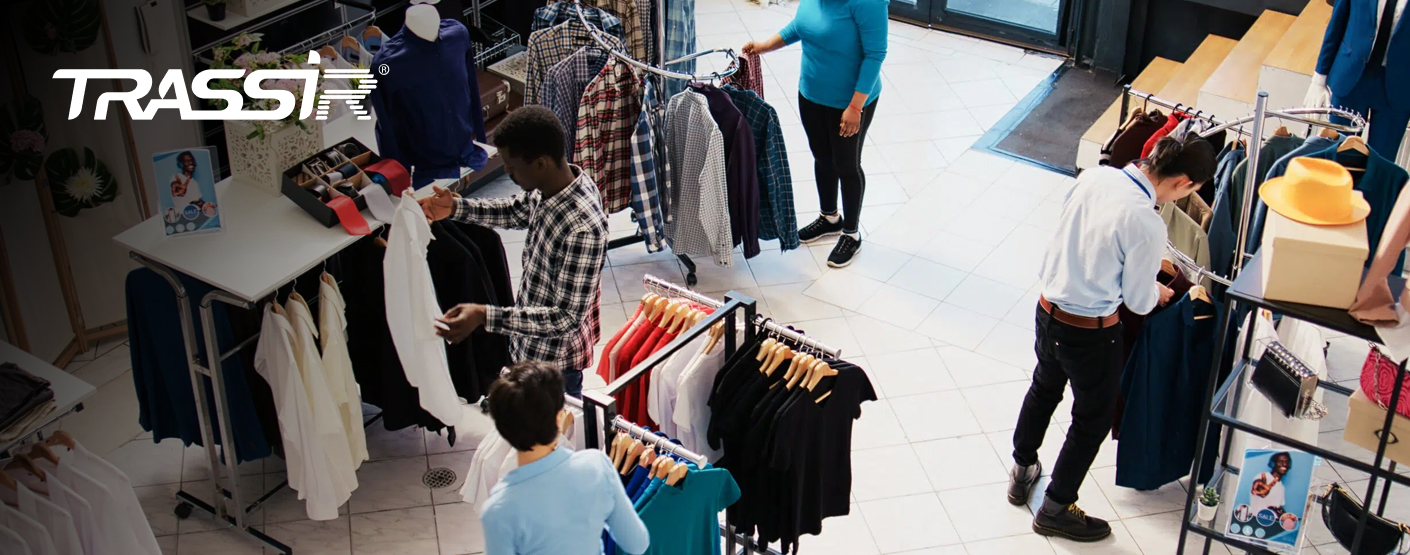
How to Reduce Retail Operational Costs With Video Analytics
The Rising Pressure on Retail Margins
Operating a profitable retail business has never been more complex. Across the industry, baseline expenses are steadily climbing. Labor costs continue to rise by an estimated 5% to 8% annually, while energy and utility bills frequently increase by 4% to 6% each year. Simultaneously, shrinkage rates are growing in many retail segments, and the administrative burden of managing multiple software subscriptions for different departments has created massive technology bloat.
Traditional cost-cutting measures—such as slashing staff hours arbitrarily or reducing security guard presence—often backfire, leading to compromised customer experiences, disorganized stores, and higher theft rates. To survive and thrive in this environment, retailers need solutions that reduce overhead without degrading the quality of the operation. This requires a shift from reactive cost-cutting to proactive, data-driven optimization.
From Cost Center to Operational Engine
For decades, video surveillance was viewed purely through the lens of loss prevention. Cameras recorded footage that was only reviewed after an incident occurred. The integration of AI and video analytics has completely transformed this technology. Modern intelligent surveillance analyzes environments in real-time, extracting actionable data about how a store operates on a minute-by-minute basis.
These systems can track customer traffic patterns, measure queue lengths at checkout, monitor shelf inventory levels, and map store occupancy by zone. Instead of merely recording a space, the analytics software interprets the activity within it. This shift allows operations, human resources, and facility management teams to use the exact same hardware that loss prevention uses, effectively turning a traditional cost center into an engine for business intelligence.
Optimizing Labor Expenses Through Data-Driven Staffing
Because labor typically represents 60% to 70% of a retailer’s total operational costs, it is the most critical area for optimization. However, guessing when a store will be busy often results in overstaffing during quiet hours and understaffing during peak rushes.
Video analytics eliminates this guesswork by providing precise, historical, and real-time data on customer foot traffic. Store managers can align employee schedules with actual customer demand. By identifying predictable peaks and valleys in store traffic, retailers can:
Reduce unnecessary overtime pay.
Reallocate staff from the sales floor to back-room tasks during slow periods.
Optimize break schedules to ensure the floor is never understaffed during a rush.
Enable remote monitoring, which can reduce or eliminate the need for costly on-site overnight security guards.
When labor is deployed exactly where and when it is needed, retailers often see a reduction in specialized staffing costs—sometimes by as much as 25% to 35% in security labor alone—while maintaining or even improving customer satisfaction scores.
Slashing Facility and Energy Costs with Smart Integration
Facility maintenance and utilities are another major drain on retail profitability. Heating, ventilation, air conditioning (HVAC), and lighting are often left running at full capacity regardless of how many people are actually inside the building.
By integrating intelligent surveillance data with building management systems, retailers can create dynamic, energy-efficient environments. Video analytics can track live occupancy data and send signals to adjust facility operations automatically. For example, if a specific zone of a large retail store is empty for an extended period, the system can autonomously dim the lighting and adjust the climate control. Furthermore, by identifying exactly when store activity begins to wind down, managers can automate energy-saving protocols before the doors even lock. Retailers utilizing these integrations frequently reduce their utility expenses by 10% to 25%.
Modernizing Loss Prevention to Protect the Bottom Line
Shrinkage remains a direct hit to profitability. While the primary function of analytics extends beyond security, its impact on traditional loss prevention is stronger than ever. Intelligent surveillance acts as a powerful deterrent to both external theft and internal employee fraud.
More importantly, AI drastically reduces the labor hours required to investigate incidents. Instead of a manager scrubbing through hours of footage to find a specific event, analytics can instantly filter video by time, location, or even the color of clothing. Faster incident resolution minimizes operational disruptions and gets staff back to customer-facing duties. Over time, a demonstrated reduction in shrinkage and a lower volume of insurance claims can also lead to reduced insurance premiums, creating compounding financial benefits.
Consolidating Technology and Scaling for Multi-Location Chains
A hidden operational cost in modern retail is technology overlap. It is common for a single retail chain to pay for a people-counting software, a separate loss prevention platform, a distinct employee management tool, and basic security camera storage.
Intelligent surveillance platforms consolidate these functions into a single interface. By retiring overlapping software subscriptions, retailers can reduce their technology software costs by 30% to 45%.
This consolidation is particularly vital for multi-location retail chains. Managing hundreds of stores requires standardized processes. Cloud-based video analytics allows corporate teams to view standardized metrics—such as traffic counts, queue wait times, and shrinkage rates—across all locations simultaneously. This centralized oversight allows regional managers to benchmark performance, identify underperforming stores, and enforce operational consistency without requiring constant physical travel.
Best Practices for Implementation and Achieving Rapid ROI
Deploying new technology across a retail environment requires a strategic approach to ensure success. Rushing a system rollout can lead to staff resistance and unused features.
To maximize the financial return, retail leaders should secure executive alignment on specific cost-reduction goals before purchasing. Implementations should be phased, rolling out to a small pilot group of stores to refine the process before a chain-wide expansion. Crucially, store-level employees must be thoroughly trained not just on how to use the software, but on how the data makes their daily jobs easier.
When implemented with clear metrics and ongoing optimization, retailers typically achieve a full return on their investment (ROI) within 12 to 18 months, driven by combined savings in labor, utilities, shrinkage, and software consolidation.
The era of viewing retail surveillance as a passive security expense is over. By embracing intelligent video analytics, retail leaders can unlock deep operational efficiencies that directly protect their profit margins. From aligning labor schedules with actual foot traffic and automating facility energy usage, to consolidating expensive software subscriptions, these systems provide a comprehensive toolkit for sustainable cost reduction. In an increasingly competitive retail landscape, the ability to make proactive, data-driven operational decisions is no longer just an advantage—it is a necessity for long-term survival.
Key Takeaways:
Labor costs can be significantly reduced by using video analytics to match employee scheduling with actual store traffic patterns.
Integrating video occupancy data with building management systems can lower energy and utility bills by automating HVAC and lighting adjustments.
Intelligent surveillance platforms consolidate multiple operational tools into one system, reducing redundant software subscription costs by up to 45%.
Modern AI features drastically reduce the time managers spend investigating loss prevention incidents, freeing them up for customer-focused tasks.
Strategic, phased implementations of video analytics typically generate a positive return on investment within 12 to 18 months.
FAQ:
Q: How does video analytics actually reduce labor costs?
A: It analyzes historical and real-time foot traffic data, allowing managers to schedule exactly the right amount of staff for busy periods and avoid overstaffing during slow periods, thereby reducing wasted hours and overtime.
Q: Can video analytics help lower our store's electricity bills?
A: Yes. By integrating camera occupancy data with your building's HVAC and lighting systems, the store can automatically adjust temperatures and dim lights in unoccupied zones.
Q: Does replacing legacy cameras with intelligent analytics require a massive upfront investment?
A: While there is an initial cost, consolidating multiple existing software subscriptions (like separate people-counters and security platforms) into one system offsets much of the expense, leading to an average ROI of 12 to 18 months.
Q: How does this technology benefit multi-location retail chains?
A: It provides corporate and regional managers with a centralized dashboard to compare performance, standardize processes, and monitor operations across all locations remotely, which reduces travel costs and improves consistency.
Articles
All articles
The Complete Guide to Retail Crowd Density Monitoring Using Video Analytics
The Complete Guide to Retail Crowd Density Monitoring Using Video Analytics

The Ultimate Guide to Occupancy Tracking Technology: Systems, Sensors, and Strategy
The Ultimate Guide to Occupancy Tracking Technology: Systems, Sensors, and Strategy
Maximizing Retail Performance: The Ultimate Guide to Heat Mapping Technology
Maximizing Retail Performance: The Ultimate Guide to Heat Mapping Technology
The Complete Guide to Deploying AI Video Analytics in Retail and Enterprise
The Complete Guide to Deploying AI Video Analytics in Retail and Enterprise
How to Design a Scalable Video Surveillance System for Multi-Site Retail
How to Design a Scalable Video Surveillance System for Multi-Site Retail

Upgrading Legacy CCTV: How to Integrate AI Without a Rip-and-Replace
Upgrading Legacy CCTV: How to Integrate AI Without a Rip-and-Replace
Upgrading Legacy CCTV: The Complete Guide to AI Security Camera Integration
Upgrading Legacy CCTV: The Complete Guide to AI Security Camera Integration
The Evolution of Video Analytics: How AI Transforms Security and Operations
The Evolution of Video Analytics: How AI Transforms Security and Operations
How AI Video Surveillance Solves Security Staffing Shortages and Reduces Costs
How AI Video Surveillance Solves Security Staffing Shortages and Reduces Costs

Maximizing Security System ROI: The Financial Case for Smart Surveillance
Maximizing Security System ROI: The Financial Case for Smart Surveillance

How to Calculate the ROI of a Business Security System
How to Calculate the ROI of a Business Security System
Master Multi-Brand CCTV Management: The Ultimate Guide to Brand-Agnostic Surveillance
Master Multi-Brand CCTV Management: The Ultimate Guide to Brand-Agnostic Surveillance

Strategic Guide to Retail Video Surveillance Migration: Upgrading Legacy Systems
Strategic Guide to Retail Video Surveillance Migration: Upgrading Legacy Systems

How to Reduce Commercial Security Costs Without Compromising Protection
How to Reduce Commercial Security Costs Without Compromising Protection
How to Reduce Retail Operational Costs With Video Analytics
How to Reduce Retail Operational Costs With Video Analytics
Security Staffing Optimization: The Complete 2026 Guide
Security Staffing Optimization: The Complete 2026 Guide

AI Retail Theft Prevention: How Smart Cameras Stop Shrinkage
AI Retail Theft Prevention: How Smart Cameras Stop Shrinkage
Modern Shopping Center Security Systems: The Complete Guide
Modern Shopping Center Security Systems: The Complete Guide
Video Management Systems Explained: Features, Benefits, and How to Choose the Right VMS
Video Management Systems Explained: Features, Benefits, and How to Choose the Right VMS

The Reality of the Single Pane of Glass: Achieving Unified IT Visibility
The Reality of the Single Pane of Glass: Achieving Unified IT Visibility
Try TRASSIR For Your Business
Learn more about how TRASSIR analytic modules work! Demo mode is an opportunity to see for yourself how the system works, and also check the interface and test all the functions.Success!
We will contact you as soon as possible