




Smart Warehouse Monitoring: IoT Solutions for Real-Time Asset Tracking Transform Logistics Operations
The logistics industry faces an unprecedented challenge: warehouse theft costs over $35 billion annually, with cargo theft incidents surging 33% year-over-year in 2025. Traditional security systems capture footage but fail to provide the real-time intelligence needed to prevent losses and streamline investigations. Smart warehouse monitoring represents a paradigm shift from passive observation to active operational intelligence, integrating IoT sensors, AI-powered video analytics, and real-time asset tracking to create unified control systems that reduce theft by 30% while cutting investigation time from hours to minutes.
Modern warehouses serve as strategic operational hubs rather than simple storage facilities, yet they face unique security and operational vulnerabilities. The concentration of high-value inventory, complex access requirements, and 24/7 operational demands create dangerous blind spots that traditional monitoring systems cannot adequately address.
Cargo theft has reached crisis levels with 2,217 reported incidents in 2024, representing a 49% increase from 2023. The average cargo theft incident now costs businesses $202,000, while organized crime groups increasingly target high-value commodities stored in distribution centers. Internal theft compounds these external threats, with warehouse shrinkage accounting for 36.5% of all retail losses.
Beyond security concerns, warehouses struggle with operational inefficiencies that directly impact profitability. Traditional asset tracking methods rely on manual processes prone to human error, resulting in "ghost assets" – purchased equipment that organizations cannot locate or effectively utilize. Research indicates that IoT technology can reduce inventory errors by up to 30%, lower operational costs, and enhance workflow efficiency.
Internet of Things (IoT) technology transforms warehouse operations by creating interconnected ecosystems of intelligent devices that collect, analyze, and act upon real-time operational data. Smart warehouse monitoring systems integrate multiple IoT components to provide comprehensive visibility and control across all facility operations.
RFID Asset Tracking Systems enable automatic identification and location tracking of inventory, equipment, and personnel throughout warehouse facilities. Passive RFID tags cost 5-15 cents each and provide reliable tracking without power sources, while active tags offer extended range capabilities up to 1,500 feet for large-scale operations. These systems achieve 98% tracking accuracy while reducing asset misplacement and improving utilization rates.
Smart warehouse monitoring solutions achieve maximum effectiveness through seamless integration with existing warehouse management systems, enterprise resource planning (ERP) platforms, and security infrastructure. This integration eliminates data silos and creates unified operational dashboards that provide real-time visibility across all warehouse activities.
TRASSIR transforms warehouse surveillance from passive monitoring to active operational intelligence through its integrated platform approach. Unlike traditional systems that simply record events, TRASSIR's architecture synchronizes every warehouse operation with corresponding video evidence, creating unified operational control systems that prevent losses while optimizing operations.
TRASSIR ActiveStock revolutionizes warehouse investigation capabilities by synchronizing video footage with operational events in real-time. This groundbreaking system integrates directly with existing WMS platforms through robust APIs, creating seamless information flow between warehouse operations and security systems.
TRASSIR Neuro Detector eliminates false alarm problems that plague traditional motion detection systems. Using advanced neural networks, the system achieves 95%+ accuracy in distinguishing between authorized personnel, vehicles, and potential security threats. This accuracy improvement allows warehouses to implement automated alert systems without overwhelming security teams with irrelevant notifications.
TRASSIR implementations consistently deliver quantifiable improvements in security effectiveness and operational efficiency. The Saudi Logistics Services deployment demonstrates how comprehensive video intelligence transforms large-scale warehouse operations, enhancing operational efficiency through automated vehicle tracking and optimized clearance processes.
Effective asset tracking combines multiple IoT technologies to create comprehensive visibility into warehouse operations. Modern systems integrate RFID tags, smart sensors, and AI algorithms to achieve unprecedented accuracy and efficiency in asset management.
Passive RFID Systems provide cost-effective tracking for large inventories, enabling automatic identification without line-of-sight requirements. Unlike barcodes requiring manual scanning, RFID tags can be scanned remotely even while assets are in motion, providing significant advantages in accuracy and efficiency. Industrial-grade RFID tags withstand harsh warehouse environments including temperature variations, moisture, and electromagnetic interference.
Smart warehouse monitoring generates vast amounts of operational data that must be analyzed and acted upon in real-time. Advanced analytics platforms process sensor data, video intelligence, and operational metrics to identify optimization opportunities and prevent problems before they impact operations.
Smart warehouse monitoring investments deliver measurable returns through multiple performance improvements. Organizations implementing comprehensive IoT solutions typically achieve return on investment within 12-24 months through reduced losses, improved efficiency, and enhanced operational visibility.
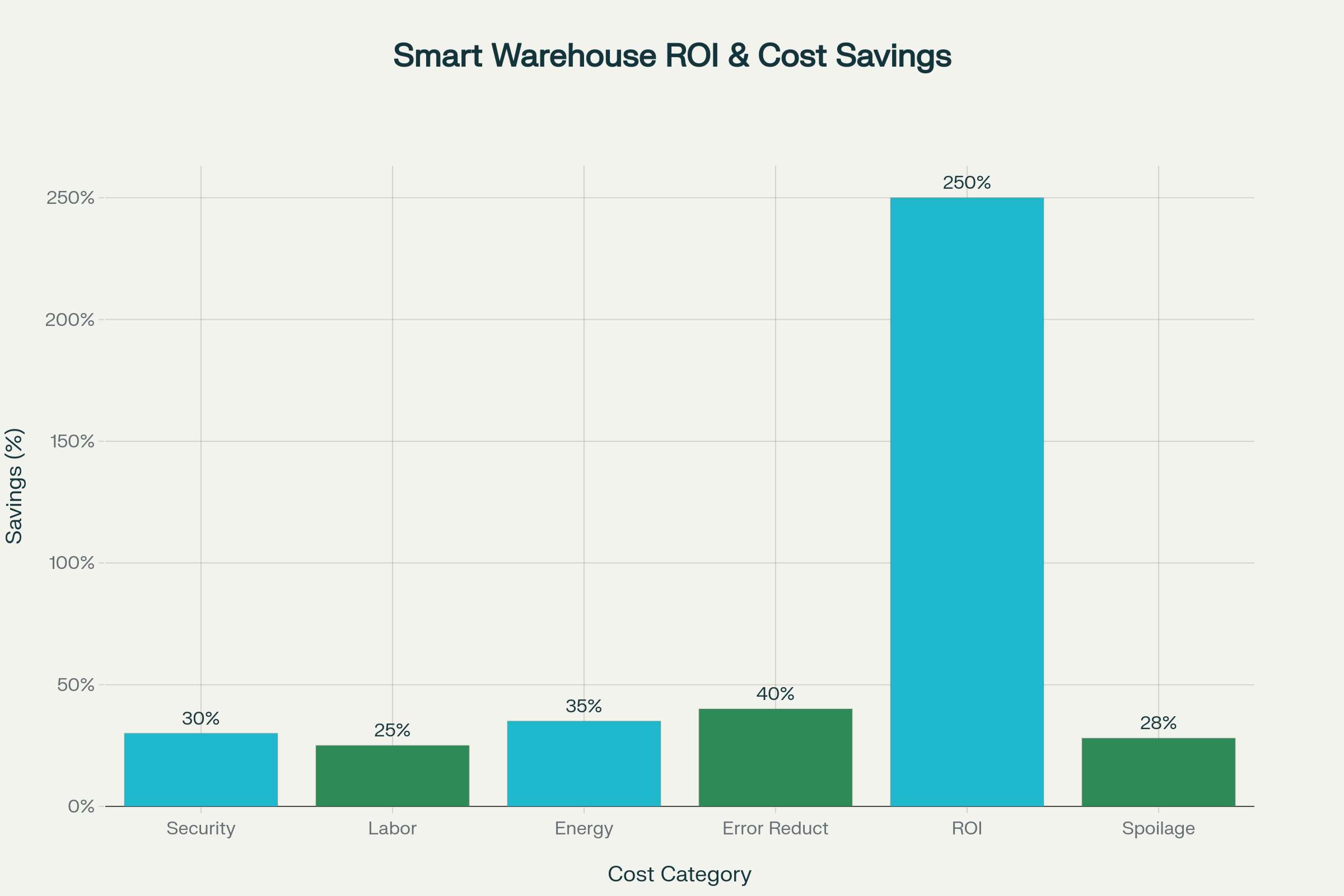
Smart Warehouse Monitoring Solutions: Quantified ROI and Cost Savings
Security and Loss Prevention: TRASSIR implementations achieve 30% reduction in security costs through automated investigation processes and real-time threat detection. Warehouse theft prevention systems reduce cargo losses by identifying suspicious activities before they result in significant financial impact.
Beyond immediate cost savings, smart warehouse monitoring provides strategic advantages that enhance long-term competitiveness. Faster order fulfillment speeds improve customer satisfaction and enable premium service offerings. Enhanced operational visibility supports data-driven decision making and continuous improvement initiatives.
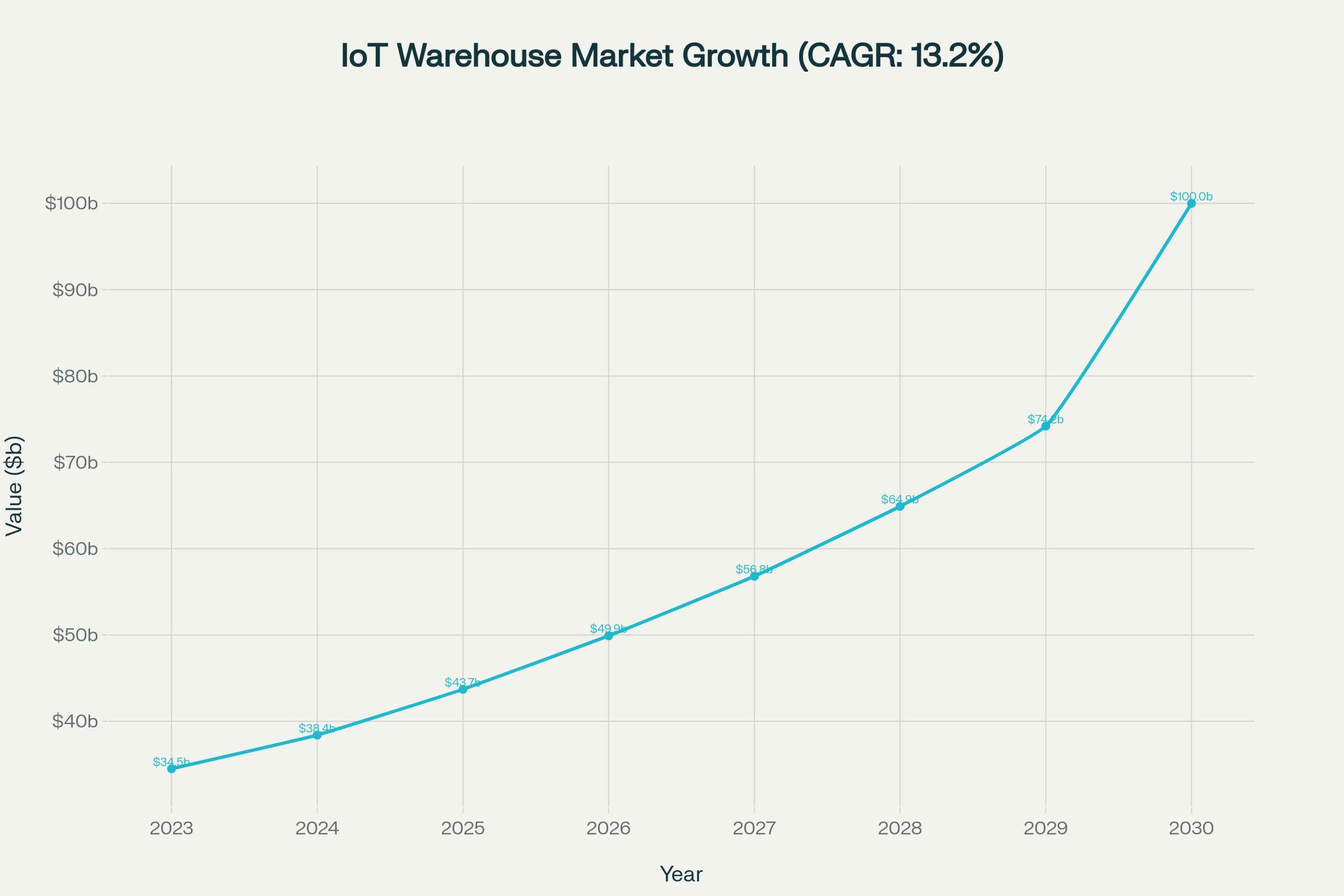
Global IoT in Logistics Market Growth Projection (CAGR: 13.2%)
The global IoT in logistics market demonstrates explosive growth, projected to expand from $34.5 billion in 2023 to $100 billion by 2030, representing a compound annual growth rate of 13.2%. This growth reflects increasing recognition of IoT technology's transformative impact on warehouse operations and supply chain efficiency.
More than 4 million warehouse robots are deployed globally, with over 90% of warehouses expected to use or adopt Warehouse Management Systems by 2025. Automation investments are driven primarily by labor shortages, with warehouse wages growing 15% in Q1 2025 – nearly four times the national average for all occupations.
The convergence of physical and cyber security creates new opportunities for comprehensive threat protection. TRASSIR's integrated approach addresses both traditional security concerns and emerging cyber-physical threats that target warehouse operations through connected systems.
Successful smart warehouse monitoring implementation requires comprehensive planning that addresses technical integration, operational workflow, and organizational change management. Organizations must evaluate their specific operational requirements and develop phased implementation approaches that minimize disruption while maximizing benefits.
Operational Baseline Analysis involves detailed evaluation of current warehouse processes, identifying inefficiencies and security vulnerabilities that smart monitoring can address. This analysis establishes performance metrics and ROI calculations that justify technology investments.
Pilot Program Implementation allows organizations to test smart monitoring solutions in controlled environments before full-scale deployment. Pilot programs validate ROI projections and identify optimization opportunities specific to each facility's operational characteristics.
The logistics industry cannot afford to maintain reactive monitoring approaches in the face of escalating security threats, operational complexity, and competitive pressures. Smart warehouse monitoring solutions provide the intelligence capabilities necessary to protect assets while optimizing operations, delivering measurable returns through reduced losses, improved efficiency, and enhanced operational visibility.
Articles
All articles
The Complete Guide to Retail Crowd Density Monitoring Using Video Analytics
The Complete Guide to Retail Crowd Density Monitoring Using Video Analytics

The Ultimate Guide to Occupancy Tracking Technology: Systems, Sensors, and Strategy
The Ultimate Guide to Occupancy Tracking Technology: Systems, Sensors, and Strategy

Maximizing Retail Performance: The Ultimate Guide to Heat Mapping Technology
Maximizing Retail Performance: The Ultimate Guide to Heat Mapping Technology

The Complete Guide to Deploying AI Video Analytics in Retail and Enterprise
The Complete Guide to Deploying AI Video Analytics in Retail and Enterprise

How to Design a Scalable Video Surveillance System for Multi-Site Retail
How to Design a Scalable Video Surveillance System for Multi-Site Retail

Upgrading Legacy CCTV: How to Integrate AI Without a Rip-and-Replace
Upgrading Legacy CCTV: How to Integrate AI Without a Rip-and-Replace

Upgrading Legacy CCTV: The Complete Guide to AI Security Camera Integration
Upgrading Legacy CCTV: The Complete Guide to AI Security Camera Integration

The Evolution of Video Analytics: How AI Transforms Security and Operations
The Evolution of Video Analytics: How AI Transforms Security and Operations

How AI Video Surveillance Solves Security Staffing Shortages and Reduces Costs
How AI Video Surveillance Solves Security Staffing Shortages and Reduces Costs

Maximizing Security System ROI: The Financial Case for Smart Surveillance
Maximizing Security System ROI: The Financial Case for Smart Surveillance

How to Calculate the ROI of a Business Security System
How to Calculate the ROI of a Business Security System

Master Multi-Brand CCTV Management: The Ultimate Guide to Brand-Agnostic Surveillance
Master Multi-Brand CCTV Management: The Ultimate Guide to Brand-Agnostic Surveillance

Strategic Guide to Retail Video Surveillance Migration: Upgrading Legacy Systems
Strategic Guide to Retail Video Surveillance Migration: Upgrading Legacy Systems

How to Reduce Commercial Security Costs Without Compromising Protection
How to Reduce Commercial Security Costs Without Compromising Protection

How to Reduce Retail Operational Costs With Video Analytics
How to Reduce Retail Operational Costs With Video Analytics

Security Staffing Optimization: The Complete 2026 Guide
Security Staffing Optimization: The Complete 2026 Guide

AI Retail Theft Prevention: How Smart Cameras Stop Shrinkage
AI Retail Theft Prevention: How Smart Cameras Stop Shrinkage

Modern Shopping Center Security Systems: The Complete Guide
Modern Shopping Center Security Systems: The Complete Guide

Video Management Systems Explained: Features, Benefits, and How to Choose the Right VMS
Video Management Systems Explained: Features, Benefits, and How to Choose the Right VMS

The Reality of the Single Pane of Glass: Achieving Unified IT Visibility
The Reality of the Single Pane of Glass: Achieving Unified IT Visibility
Try TRASSIR For Your Business
Learn more about how TRASSIR analytic modules work! Demo mode is an opportunity to see for yourself how the system works, and also check the interface and test all the functions.Success!
We will contact you as soon as possible