Real-Time Video Surveillance Explained: How AI Video Analytics Improves Security, Response, and Operations
What Real-Time Video Surveillance Actually Means
Real-time video surveillance is the continuous monitoring and analysis of live camera feeds so that suspicious activity, safety issues, or operational anomalies can be identified while they are happening. That makes it different from older passive systems, which mainly served as recording tools for later review rather than active tools for intervention.
At its core, a real-time system combines cameras, network connectivity, software for video analytics, and a workflow for generating alerts or escalating incidents. In stronger setups, the system can also connect to speakers, alarms, email notifications, access control, or emergency response procedures, turning a camera network into an operational sensor layer rather than a simple archive.
This shift matters because most security failures are not caused by a lack of footage. They happen because critical events are buried in too much video, detected too late, or missed entirely when human operators are expected to watch many streams at once for long periods.
How AI Event Detection Changes Surveillance
AI video analytics improves surveillance by examining video frame by frame, identifying objects, motion, behaviors, and patterns that fit predefined rules or learned models. Instead of asking staff to continuously monitor every feed, the system helps surface events that are more likely to require attention.
A useful way to understand this is to separate simple events from complex ones. A simple event might be motion in a restricted zone, while a more complex event might combine multiple signals such as movement direction, object type, dwell time, or access behavior to classify something as tailgating, loitering, trespassing, or an abandoned object.
Modern systems increasingly rely on machine learning and deep learning to improve recognition, anomaly detection, and context over time. Research cited in the references also shows that event detection becomes more powerful when systems move beyond raw video and incorporate structured rules, temporal logic, and, in some cases, multiple sensors or camera views.
Some newer approaches go a step further by pairing visual detection with generative AI or natural-language configuration. In practical terms, that can allow teams to describe what they want the system to watch for, generate more readable incident logs, and trigger automated responses such as spoken alerts or notifications, although these capabilities still require careful tuning to avoid overreaction or vague detection criteria.
Where Real-Time Monitoring Creates the Most Value
The strongest use cases appear in environments where delay is expensive, visibility is limited, or coverage demands exceed what on-site staff can reliably handle. That includes retail spaces, apartment communities, office buildings, industrial yards, construction sites, transport settings, and other high-traffic or high-risk locations.
In retail, real-time monitoring can help detect theft, suspicious movement, after-hours access, and operational patterns that influence layout or staffing decisions. In residential or mixed-use properties, the value is often tied to perimeter awareness, unauthorized entry detection, shared-space monitoring, and quicker documentation when an incident affects residents, visitors, or property managers.
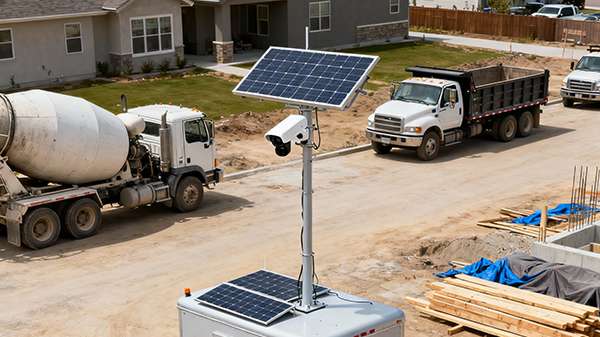
Industrial and construction settings bring a different set of needs. These sites often have large open areas, shifting activity zones, expensive equipment, and safety risks that make full physical coverage difficult, so live video combined with event detection can help identify intrusion, unsafe behavior, or compliance issues more effectively than static alarms alone.
Healthcare, elder care, and family monitoring also appear in the source material as emerging or experimental use cases, especially for fall detection, movement monitoring, and emergency escalation. These examples show the broader promise of AI-enabled monitoring, but they also highlight the need for stricter reliability standards because the cost of false negatives or poorly tuned alerts can be much higher in care settings than in basic perimeter security.
The Operational Benefits and Trade-Offs
The most obvious benefit of real-time surveillance is speed. When a system can verify an event quickly and send a targeted alert, response time usually improves, and that can make a meaningful difference in theft prevention, safety incidents, or emergency coordination.
Another major advantage is efficiency. Video analytics can reduce the burden of watching endless footage manually, help prioritize what deserves attention, and in some cases lower the need for constant human observation across every camera feed. That does not eliminate the need for people, but it does change their role from passive watchers to active reviewers and responders.
False alarm reduction is another important improvement over traditional alarm-only setups. Because video systems can verify what triggered an alert, they can filter out some unnecessary escalations and provide better context before law enforcement or internal teams are involved. That said, accuracy depends heavily on configuration, scene quality, and the rules used to define suspicious activity.
There are also trade-offs. Any real-time system can generate too much noise if sensitivity is set poorly, camera placement is weak, or the environment changes in ways the model does not handle well, such as lighting shifts, reflections, screen flicker, weather, or crowd density. In other words, smarter surveillance is not just about adding AI; it is about reducing irrelevant events so meaningful ones stand out.
What a Strong System Needs to Work Well
A dependable system starts with the basics: appropriate camera selection, clear coverage of critical areas, and infrastructure that can support continuous streaming and alert delivery. The references mention several camera formats, but the broader lesson is simpler: the right camera depends on what must be seen, from where, under what lighting conditions, and across what field of view.
Analytics configuration matters just as much as hardware. Teams need to define which events matter, what thresholds should trigger action, who receives alerts, and what response should follow, whether that means review, escalation, deterrence, or evidence preservation. Without this operational logic, even technically capable systems tend to become noisy, underused, or distrusted.
Maintenance is another non-negotiable part of performance. Software updates, periodic system checks, storage management, and retraining or recalibration all affect long-term reliability, especially in environments where layouts, traffic patterns, or risk conditions change over time. A real-time monitoring program should be treated as a living system, not a one-time installation.
Data handling also deserves serious attention. Recorded footage and event logs may be needed for investigations, insurance, training, compliance, or audit trails, but access controls, retention rules, and secure storage are essential to protect sensitive data and reduce legal or privacy risk.
Implementation and Governance Considerations
Organizations often focus first on features, but deployment success usually depends more on policy than technology. Before rollout, teams should decide which incidents the system is expected to detect, what response times are realistic, how success will be measured, and where human review remains mandatory.
A phased implementation is usually more practical than a full-scale launch. Starting with a pilot in a high-value area allows teams to test camera coverage, alert thresholds, workflow integration, and operator burden before expanding across the site or portfolio. This is especially important because the quality of event detection often improves through iteration rather than through a perfect first configuration.
Governance should also cover fairness, privacy, and proportionality. Systems that monitor people in real time may improve safety, but they can also create trust and compliance concerns if data collection is excessive, retention is unclear, or analytic categories are poorly justified. The most credible deployments are the ones that pair strong detection capabilities with clear internal rules, limited access, and a defined purpose for every workflow.
An easy example is after-hours intrusion detection in a warehouse. If the system is configured only for restricted times and zones, with short retention for non-events and immediate review for verified alerts, it is usually easier to defend operationally and ethically than a vague setup that watches everything, stores everything, and escalates too broadly.
Real-time video surveillance is most valuable when it turns live footage into timely, usable decisions rather than simply producing more recordings. AI event detection adds that capability by helping systems identify patterns, verify incidents, and prioritize what matters, but the real gains come from thoughtful design, disciplined tuning, and clear response workflows. In practice, the best systems are not the ones with the most features, but the ones that combine visibility, accuracy, and operational fit in a way people can trust and use every day.
Key Takeaways:
Real-time video surveillance differs from traditional recording by enabling live analysis and immediate action.
AI video analytics helps surface meaningful events, reduce manual monitoring load, and improve alert quality.
High-value use cases include retail, residential properties, industrial sites, construction, transport, and selected care environments.
System performance depends on tuning, maintenance, storage practices, and clear operational workflows, not just camera count or AI labels.
A strong deployment balances security value with privacy, governance, and realistic response procedures.
FAQ:
Q: How is real-time video surveillance different from standard CCTV?
A: Standard CCTV often focuses on recording for later review, while real-time surveillance adds live monitoring, automated analysis, and alerting so teams can act during an incident instead of only after it.
Q: Does AI replace human security staff?
A: No, the references support a model where AI filters and prioritizes events, while people still review context, make judgments, and handle response.
Q: What kinds of events can these systems detect?
A: Depending on configuration, they can detect motion, intrusion, suspicious behavior, rule violations, abandoned objects, unsafe conditions, and other events defined through analytics rules or trained models.
Q: What makes these systems fail in practice?
A: Common problems include poor camera placement, excessive sensitivity, weak workflows, inadequate maintenance, environmental noise, and unclear definitions of what should trigger an alert.
Articles
All articlesReal-Time Video Surveillance Explained: How AI Video Analytics Improves Security, Response, and Operations
Real-Time Video Surveillance Explained: How AI Video Analytics Improves Security, Response, and Operations
How to Reduce Alert Fatigue Using AI in Security Operations
How to Reduce Alert Fatigue Using AI in Security Operations
The True Cost of False Alarms: How AI and Remote Guarding Are Transforming Commercial Security
The True Cost of False Alarms: How AI and Remote Guarding Are Transforming Commercial Security
A Complete Guide to Anomaly Detection in Retail
A Complete Guide to Anomaly Detection in Retail
Multi-Site Security Management: Building a Centralized Surveillance Strategy
Multi-Site Security Management: Building a Centralized Surveillance Strategy
The Reality of the Single Pane of Glass: Achieving Unified IT Visibility
The Reality of the Single Pane of Glass: Achieving Unified IT Visibility
Video Management Systems Explained: Features, Benefits, and How to Choose the Right VMS
Video Management Systems Explained: Features, Benefits, and How to Choose the Right VMS
The Ultimate Guide to Modern Retail Security Systems and Surveillance
The Ultimate Guide to Modern Retail Security Systems and Surveillance

Supply Chain Cybersecurity: How TRASSIR Reduces Logistics Ransomware Risk by 65%
Supply Chain Cybersecurity: How TRASSIR Reduces Logistics Ransomware Risk by 65%

AI Warehouse Surveillance: How TRASSIR Cuts Theft by 30% in 2025
AI Warehouse Surveillance: How TRASSIR Cuts Theft by 30% in 2025
Construction Site Equipment Tracking: Preventing Million-Dollar Losses Through Advanced Logistics Solutions
Construction Site Equipment Tracking: Preventing Million-Dollar Losses Through Advanced Logistics Solutions
Zero Trust Security for Modern Supply Chain Operations: How TRASSIR Transforms Logistics Cybersecurity
Zero Trust Security for Modern Supply Chain Operations: How TRASSIR Transforms Logistics Cybersecurity
Real-Time Vehicle Monitoring: Enhancing Fleet Security with GPS and Cameras
Real-Time Vehicle Monitoring: Enhancing Fleet Security with GPS and Cameras

Preventing Cargo Theft: Advanced Security Solutions for Logistics Centers
Preventing Cargo Theft: Advanced Security Solutions for Logistics Centers

Video Analytics for Inventory Management: Streamlining Operations with TRASSIR's Intelligent Solutions
Video Analytics for Inventory Management: Streamlining Operations with TRASSIR's Intelligent Solutions
Drone Surveillance Technology: Revolutionizing Logistics Site Security
Drone Surveillance Technology: Revolutionizing Logistics Site Security
Smart Warehouse Monitoring: IoT Solutions for Real-Time Asset Tracking Transform Logistics Operations
Smart Warehouse Monitoring: IoT Solutions for Real-Time Asset Tracking Transform Logistics Operations

Predictive Analytics for Warehouse Safety: Reducing Accidents with AI
Predictive Analytics for Warehouse Safety: Reducing Accidents with AI
The Advantages of a Comprehensive Home Surveillance System
The Advantages of a Comprehensive Home Surveillance System
Seeing Clearly: The Advantages of 4K Surveillance for Businesses
Seeing Clearly: The Advantages of 4K Surveillance for Businesses
Try TRASSIR For Your Business
Learn more about how TRASSIR analytic modules work! Demo mode is an opportunity to see for yourself how the system works, and also check the interface and test all the functions.Success!
We will contact you as soon as possible