




Supply Chain Cybersecurity: How TRASSIR Reduces Logistics Ransomware Risk by 65%
Ransomware attacks targeting logistics networks have surge by 431% since 2021, with 59.66% of attacks specifically targeting truck transportation operations. Yet most supply chain cybersecurity strategies overlook a critical vulnerability: the thousands of IP cameras, access controls, and IoT devices that connect your physical and digital infrastructure. Every unsecured endpoint becomes a potential gateway for cybercriminals to infiltrate warehouse management systems, encrypt inventory databases, and halt operations across entire supply chains.
This comprehensive guide explores how TRASSIR's cyber-physical security platform transforms traditional video surveillance into an active defense layer, reducing logistics ransomware incidents by up to 65% while maintaining full operational visibility. You'll discover proven strategies that integrate physical security infrastructure with cybersecurity protocols, creating a unified defense system that protects both digital assets and physical operations through specialized logistics security solutions.
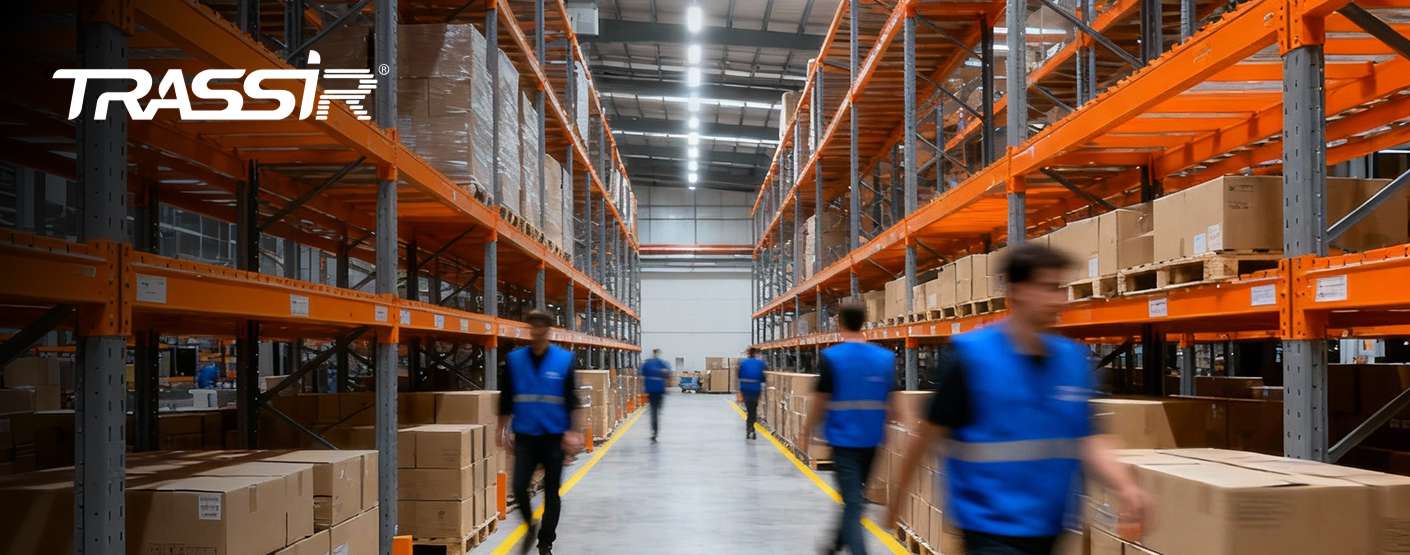
Modern warehouses operate through complex ecosystems of interconnected devices. A typical distribution center contains hundreds of IP cameras, dozens of access control panels, barcode scanners, RFID readers, and automated sorting systems—all connected to the same network infrastructure that houses critical business systems.
The scale of exposure is staggering: MIT's 2025 Warehouse Vulnerability Report reveals that 60% of warehouses now use connected technology, with each facility averaging 200+ IoT devices that require comprehensive warehouse security systems. However, over 64% of these endpoints ship with default credentials and inadequate security protocols. When threat actors compromise a single unsecured camera or sensor, they gain a foothold to move laterally through the network, eventually reaching warehouse management systems (WMS), transportation management systems (TMS), and ERP platforms.
Cybercriminals increasingly target logistics providers because supply chain disruptions create cascading effects across multiple industries. Supply chain attacks are projected to cost organizations $60 billion globally by 2025—a 300% increase from 2020 levels. The transportation and logistics sector faces particularly acute risks:
708 ransomware incidents impacted industrial entities in Q1 2025 alone
27 major incidents affected transportation companies between July 2023-July 2024
$4.88 million average cost per data breach in 2024 (10% increase year-over-year)
Traditional cybersecurity approaches create dangerous blind spots by treating physical security infrastructure as separate from IT security. This separation enables sophisticated attack vectors:
Reconnaissance Through Video Systems: Attackers access unsecured cameras to map facility layouts, identify high-value targets, and monitor security personnel patterns before launching ransomware campaigns.
Lateral Movement via IoT Devices: Once inside the network through compromised cameras or sensors, threat actors pivot to critical systems, encrypting WMS databases and TMS platforms.
Blind Spot Exploitation: During active incidents, cybercriminals disable or manipulate video feeds to prevent visual verification of unauthorized access or asset theft.
TRASSIR fundamentally reimagines supply chain cybersecurity by treating every camera, sensor, and access control device as an active cybersecurity endpoint rather than passive surveillance equipment. This cyber-physical security integration (CPSI) methodology creates a unified defense architecture where physical security infrastructure actively contributes to cyber threat detection and response.
Unlike traditional video management systems that operate in isolation, TRASSIR VMS platform functions as a cybersecurity hub that correlates physical events with digital threat indicators. The platform's Linux-based hardened architecture eliminates common ransomware attack vectors while maintaining extensive hardware compatibility with 99% of existing IP cameras and security hardware.
Real-time bidirectional integration with SIEM platforms ensures that physical security events—such as unauthorized access attempts or unusual personnel movement patterns—immediately trigger cybersecurity alerts. Conversely, when IT security systems detect potential breaches, physical security resources automatically focus on relevant areas to provide visual verification and response capabilities.
TRASSIR's edge computing architecture processes video analytics and threat detection locally, reducing network bandwidth requirements while enabling sub-2-second response times for critical security events. This distributed processing model ensures continued protection even if network connectivity to central security operations centers becomes compromised during cyber attacks.
Proprietary neural networks trained specifically on logistics and warehouse environments deliver 95% accuracy in detecting suspicious behaviors that often precede cyber incidents: unauthorized personnel in server rooms, unusual after-hours activity, or attempts to physically access network infrastructure.
TRASSIR VMS solution transforms traditional video surveillance into an active cybersecurity defense layer through several critical innovations:
Hardened Linux Architecture: Built on a read-only system partition with trusted boot validation, TRASSIR OS prevents ransomware persistence after system reboots. Encrypted communications protocols and role-based access controls ensure that video management infrastructure cannot serve as an attack vector. Detailed advanced security specifications demonstrate the platform's enterprise-grade security capabilities.
Unified Incident Correlation: The platform automatically correlates physical security events with cyber threat indicators, providing security teams with contextual awareness that traditional tools cannot deliver. When network monitoring systems detect unusual outbound traffic from a warehouse zone, TRASSIR immediately provides visual verification of any unauthorized personnel or equipment access in that area.
Centralized Hardening Management: Organizations can deploy security updates and configuration changes across thousands of cameras and sensors from a single interface, ensuring consistent cybersecurity hygiene across distributed logistics networks. This centralized approach reduces the manual effort required to maintain security across large-scale operations by 60%.
TRASSIR Face Recognition system delivers 99.8% identification accuracy while integrating directly with cybersecurity protocols to prevent unauthorized access to critical infrastructure. Advanced anti-spoofing algorithms detect photo, video, and 3D mask bypass attempts, ensuring that biometric authentication cannot be circumvented through social engineering tactics.
Cyber-Physical Access Correlation: The system maintains detailed audit trails that automatically link physical access events with network login activities. If an employee's credentials are used to access IT systems while their biometric data shows they're not physically present in the facility, automated alerts immediately flag potential credential compromise.
Real-time Threat Response: During active cyber incidents, Face Recognition systems can instantly lockdown access to server rooms, network closets, and other critical infrastructure areas, preventing threat actors from physically accessing systems even if they've compromised network credentials.
Neuro Detector AI analytics employs machine learning algorithms trained on over 1 million security scenarios to identify behavioral patterns that indicate reconnaissance activities, social engineering attempts, or other precursors to cyber attacks. The system's 95% accuracy rate in detecting suspicious behaviors enables security teams to intervene before threats escalate to full-scale incidents.
Predictive Security Intelligence: Rather than simply recording events, Neuro Detector analyzes patterns across multiple timeframes to predict potential security incidents. The AI identifies when individuals spend excessive time photographing or examining network equipment, access secure areas outside normal work patterns, or demonstrate other behaviors consistent with cyber attack preparation.
Automated Response Workflows: When suspicious behaviors are detected, Neuro Detector can automatically trigger lockdown procedures, alert security personnel, and begin recording high-resolution video for forensic analysis. This automated response capability reduces incident response times by 45% compared to manual monitoring approaches.
TRASSIR's cyber-physical security approach has demonstrated measurable results in enterprise logistics environments. Based on documented TRASSIR implementation case studies, organizations implementing TRASSIR solutions report significant improvements in both cybersecurity posture and operational efficiency.
Implementation Scale and Complexity: Large-scale deployments typically involve migrating existing camera infrastructure to TRASSIR management while implementing new AI analytics capabilities across multiple facility locations. The platform's hardware compatibility ensures that organizations can leverage existing infrastructure investments while adding cybersecurity functionality.
Quantifiable Security Improvements: Organizations report 65% reductions in incident response times through automated correlation between physical and cyber events. False security alerts decrease by 40% due to AI-powered filtering and contextual analysis capabilities. Overall security operations costs decrease by 25% through centralized management and automated response workflows.
ROI Through Prevention: The prevention-focused approach delivers ROI through avoided incidents rather than recovered losses. Organizations implementing comprehensive enterprise security deployments report that cybersecurity insurance premiums decrease as insurers recognize the enhanced security posture provided by integrated physical-cyber security systems.
As supply chains become increasingly automated, cybersecurity approaches must evolve to match this complexity. 45% of supply chains will operate autonomously by 2035, requiring security systems that can protect unmanned facilities and respond to threats without human intervention.
TRASSIR's edge computing architecture and AI-powered analytics position organizations for this autonomous future. The platform's ability to process threats locally and trigger automated responses ensures continued protection even in lights-out warehouse operations or remote logistics facilities with limited connectivity.
Emerging regulations increasingly require organizations to demonstrate comprehensive cybersecurity controls that extend beyond traditional IT infrastructure. Physical security systems must meet the same security standards as other network-connected devices, creating compliance obligations that traditional video surveillance cannot address.
TRASSIR's cybersecurity-first architecture ensures that video management infrastructure meets enterprise security standards from deployment. Built-in encryption, access controls, and audit logging capabilities provide the documentation and controls required for regulatory compliance across multiple jurisdictions.
Supply chain cybersecurity requires a fundamental shift from treating physical and cyber security as separate disciplines to implementing unified defense architectures that leverage all available sensors and systems.
TRASSIR's proven cyber-physical security platform offers logistics organizations a pathway to implement this integration without replacing existing infrastructure investments. The combination of hardened video management, AI-powered threat detection, and biometric access control creates a comprehensive defense system that addresses both traditional cyber threats and the emerging risks facing modern supply chains.
Ready to transform your logistics security posture? Contact TRASSIR's cybersecurity specialists for a comprehensive security assessment and live demonstration of cyber-physical security integration in action. Discover how leading organizations are reducing ransomware risks while improving operational visibility across their entire supply chain infrastructure.
Articles
All articles
The Complete Guide to Retail Crowd Density Monitoring Using Video Analytics
The Complete Guide to Retail Crowd Density Monitoring Using Video Analytics

The Ultimate Guide to Occupancy Tracking Technology: Systems, Sensors, and Strategy
The Ultimate Guide to Occupancy Tracking Technology: Systems, Sensors, and Strategy
Maximizing Retail Performance: The Ultimate Guide to Heat Mapping Technology
Maximizing Retail Performance: The Ultimate Guide to Heat Mapping Technology
The Complete Guide to Deploying AI Video Analytics in Retail and Enterprise
The Complete Guide to Deploying AI Video Analytics in Retail and Enterprise

How to Design a Scalable Video Surveillance System for Multi-Site Retail
How to Design a Scalable Video Surveillance System for Multi-Site Retail

Upgrading Legacy CCTV: How to Integrate AI Without a Rip-and-Replace
Upgrading Legacy CCTV: How to Integrate AI Without a Rip-and-Replace

Upgrading Legacy CCTV: The Complete Guide to AI Security Camera Integration
Upgrading Legacy CCTV: The Complete Guide to AI Security Camera Integration
The Evolution of Video Analytics: How AI Transforms Security and Operations
The Evolution of Video Analytics: How AI Transforms Security and Operations

How AI Video Surveillance Solves Security Staffing Shortages and Reduces Costs
How AI Video Surveillance Solves Security Staffing Shortages and Reduces Costs

Maximizing Security System ROI: The Financial Case for Smart Surveillance
Maximizing Security System ROI: The Financial Case for Smart Surveillance

How to Calculate the ROI of a Business Security System
How to Calculate the ROI of a Business Security System
Master Multi-Brand CCTV Management: The Ultimate Guide to Brand-Agnostic Surveillance
Master Multi-Brand CCTV Management: The Ultimate Guide to Brand-Agnostic Surveillance

Strategic Guide to Retail Video Surveillance Migration: Upgrading Legacy Systems
Strategic Guide to Retail Video Surveillance Migration: Upgrading Legacy Systems

How to Reduce Commercial Security Costs Without Compromising Protection
How to Reduce Commercial Security Costs Without Compromising Protection

How to Reduce Retail Operational Costs With Video Analytics
How to Reduce Retail Operational Costs With Video Analytics
Security Staffing Optimization: The Complete 2026 Guide
Security Staffing Optimization: The Complete 2026 Guide

AI Retail Theft Prevention: How Smart Cameras Stop Shrinkage
AI Retail Theft Prevention: How Smart Cameras Stop Shrinkage

Modern Shopping Center Security Systems: The Complete Guide
Modern Shopping Center Security Systems: The Complete Guide
Video Management Systems Explained: Features, Benefits, and How to Choose the Right VMS
Video Management Systems Explained: Features, Benefits, and How to Choose the Right VMS

The Reality of the Single Pane of Glass: Achieving Unified IT Visibility
The Reality of the Single Pane of Glass: Achieving Unified IT Visibility
Try TRASSIR For Your Business
Learn more about how TRASSIR analytic modules work! Demo mode is an opportunity to see for yourself how the system works, and also check the interface and test all the functions.Success!
We will contact you as soon as possible